Salvage Logging BC Risks: Burned Trees Come at a Cost

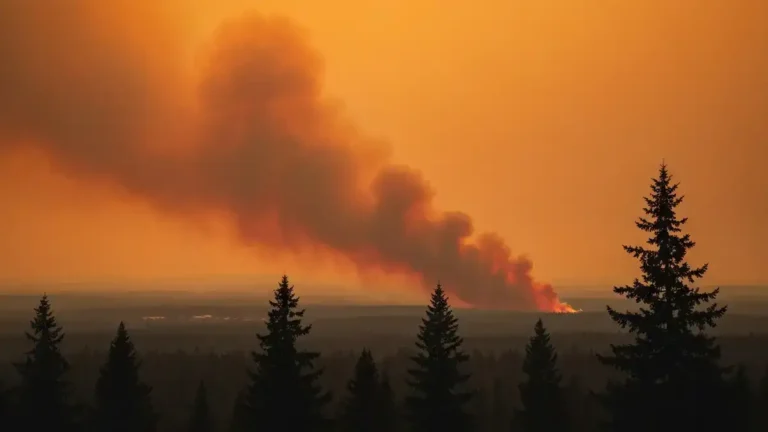
The charred stands left behind by British Columbia’s record wildfire seasons look like stranded value — timber that will rot if it isn’t harvested quickly. That logic has driven a province-wide push to log burned forests faster than ever before, with permit timelines slashed and volumes doubling year over year. But the salvage logging BC risks that concern ecologists, hydrologists, and forestry analysts are not hypothetical. They are already written in the history of what happened last time the province logged its way through a natural disturbance — and left a chain of closed mills in its wake.
BC’s Salvage Logging Push Hits Record Volumes
British Columbia’s forest industry processed more than one million cubic metres of burned logs in the 2024–25 fiscal year, according to BC Government News — roughly twice the volume from the year before and about seven per cent of all logs processed by mills that year. To keep pace, the province set a target to turn around salvage cutting permits in 25 days rather than the previous standard of 40.
The government framed the effort as turning wildfire devastation into economic opportunity, and for mill operators desperate for fibre supply, the appeal is clear. Burned Douglas-fir can remain harvestable for lumber for two to three years after a fire, and every cubic metre left standing is revenue lost. In 2025, the Wildfire Salvage Leadership Committee — a body created by the Ministry of Forests in 2024 to coordinate planning across government, industry, and First Nations — helped some of the fastest salvage permits in provincial history reach the field within weeks of a fire’s end.
What is rarely discussed with equal emphasis is where this trajectory leads.
The Falldown Effect: A Pattern BC Has Seen Before
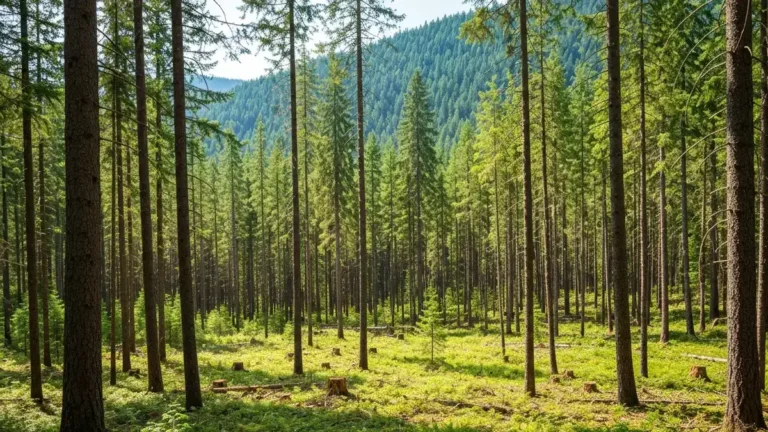
The “falldown effect” is the term foresters use for the moment when logging rates drop sharply because the largest, most accessible, and most commercially valuable trees are gone and the second-growth planted in their place is decades from merchantable size. BC has been living through a slow-motion version of this phenomenon for years: logging rates in the province have plummeted by more than half since the peak volumes of the 1980s, according to reporting by The Narwhal.
The parallels to the current wildfire salvage moment are not lost on analysts. In three BC interior timber supply areas — Lillooet, the Lakes, and 100 Mile House — the province mounted a massive salvage logging response to the mountain pine beetle outbreak of the early 2000s, drawing forward timber volumes at an accelerated pace. All five mills that relied on those supply areas have since closed due to subsequent timber shortfalls. The aggressive harvest helped sustain employment briefly but consumed the resource base needed for long-term supply.
Today, the Lillooet and Lakes timber supply areas are again at the centre of the concern: fifteen per cent of the trees in their timber harvesting land base have been burned by wildfire. The Fort St. John area sits at thirteen per cent. These are not marginal losses. They are structural reductions in the fibre base that will compound the falldown already underway.
According to The Tyee’s analysis, Ministry of Forests personnel are aware that accelerating wildfire salvage hastens this effect. The province is nonetheless pressing forward — with the same reasoning, and in the same regions, that produced the mill closures of the past two decades.
Salvage Logging BC Risks to Ecology and Water
The timber supply concern is matched by a body of ecological research that challenges the assumptions behind aggressive post-fire harvesting.
Snags — the standing dead trees left behind by wildfire — are among the most ecologically productive structures in a burned forest. Species like the black-backed woodpecker move into fire-killed stands within weeks to feed on wood-boring beetle larvae and to excavate nest cavities in softened wood. Research from the US Forest Service and others shows that salvage operations removed an average of 71% of snag basal area in the Chips Fire and 64% in the Rim Fire within 50 metres of surveyed locations — effectively eliminating the habitat feature the fire created. Eight of 24 species groups studied experienced significant population declines following salvage logging, with lichen, bird, and beetle communities faring the worst.
Water quality is equally affected. A study of post-fire salvage in the Rocky Mountains of Alberta found that logged watersheds carried 37 times more sediment than unburned watersheds, and 28 times more than forests that burned but were left unharvested. Some of those watersheds had not recovered after eleven years. When heavy machinery crosses burned ground stripped of its organic layer and nitrogen-fixing plants — fireweed, ceanothus, aspen shoots — the damage to soil structure can persist far longer than the initial fire disturbance.
“It’s going to burn again.”
— Robert Gray, wildfire ecologist, via The Narwhal
Gray has pointed out that in areas with histories of low-intensity, frequent wildfire, removing larger fire-resistant trees removes the very structures most likely to survive a future fire — the opposite of the fuel reduction logic often used to justify post-fire harvest.

Dead Trees Have More Value Than They Look
One of the more counterintuitive findings from recent research is that burned forests are not the ecological wasteland they appear to be from the roadside. Dead trees continue to store carbon long after fire — even heavily burned forests maintain the majority of their carbon in soil, snags, and down wood. Removing that material for lumber transfers stored carbon into short-lived wood products while eliminating the slow-release carbon storage function that snags provide over decades of decay.
A 2025 study published in the Proceedings of the National Academy of Sciences found no evidence that removing dead trees reduces the risk of fast-moving wildfires. The paper concluded that post-disturbance logging is primarily an economic intervention — not a fire-safety measure — and that the fire-risk justification has been used to authorize large-scale timber removal from federal and provincial lands with limited ecological basis.
The province’s current approach conflates two distinct goals: recovering economic value from a natural disturbance, and genuinely managing future fire risk. The research record suggests these goals require different tools applied at different scales, with ecologists calling for careful retention of mature snag patches, protection of high-severity burned areas from ground disturbance, and a recalibration of what “salvage” is actually for.
BC’s forests have absorbed compounding disturbances — beetle, fire, drought, and now accelerating climate-driven fire seasons — and each wave of salvage logging has left the land with fewer of the large, old trees that anchor both ecological and economic productivity. The history of BC’s post-beetle mill closures makes the cost of the next falldown legible. Whether the province adjusts before the pattern repeats is the question the current salvage season is already answering.