Interfor Is Hiring Millwrights at Its Timmins Sawmill — Here’s What That Signals
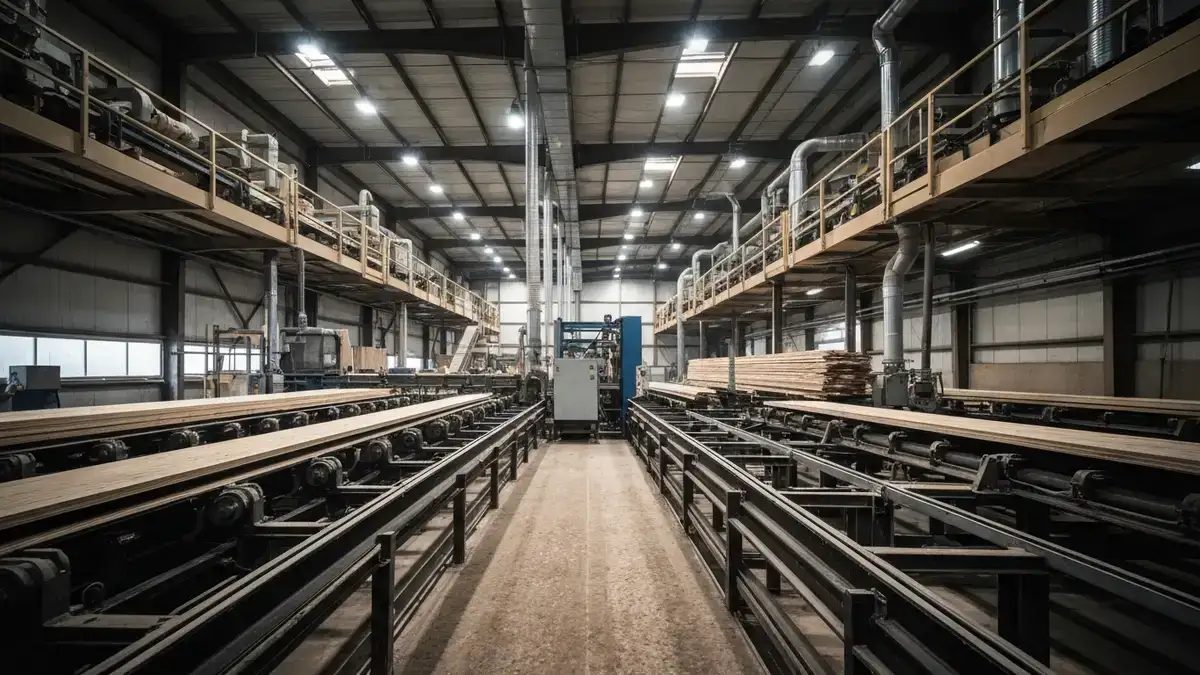
Interfor is hiring. The company — one of the world’s largest forest products producers — has launched a recruitment drive for Industrial Millwrights at its Timmins, Ontario sawmill, a facility that has been operating since 1919 and remains one of the most enduring employers in Northern Ontario’s resource sector.
The positions require a Red Seal Millwright Certification or Planer Technician certification. Interfor is emphasizing a 4-day workweek structure — 10-hour shifts, or specific weekend rotations — along with internal advancement opportunities and what the company describes as a top-tier safety culture. It is the kind of package designed to compete in a labour market where millwrights have no shortage of options.
That competitive framing is the real story here.
What a Millwright Does on the Mill Floor
Millwrights are the trades workers who keep sawmill production running. They install, maintain, align, and repair the industrial machinery that converts raw logs into dimensional lumber — from debarkers and head rigs to edgers, trim saws, and planer lines. When equipment goes down, millwrights are the ones who diagnose the fault and get it back in production. In a facility built around continuous throughput, a millwright’s ability to minimize downtime is directly tied to the mill’s output per shift.
At a large, long-running operation like the Timmins sawmill, that work spans both modern automated systems and legacy equipment that requires a mechanic’s instinct as much as a technician’s certification. A Red Seal designation — Canada’s interprovincial standard for skilled trades — signals that a candidate has met the full breadth of competency requirements. Planer Technician certification, which Interfor is also accepting, reflects the specialization found in finishing-end operations where lumber is surfaced and graded before shipment.
A Mill With a Century of History — and a Skilled Trades Problem
The Timmins sawmill has been processing lumber since 1919. That longevity is a point of pride — the company describes the facility as “a staple of Northern Ontario” and references a “Timmins Tough” mentality among its workforce. But it also means the mill is hiring into a labour market that has changed substantially from the one that built and staffed it over the past century.
Northern Ontario is resource-sector country. Mining, construction, and forestry all compete for the same pool of trades workers, and millwrights — a ticket that transfers readily between industries — are among the most portable of those credentials. When commodity prices are strong and capital projects are active, mills can find themselves competing against mine sites and pipeline contractors for the same Red Seal talent.
The skilled trades shortage in Canadian sawmilling is not a new problem, but it has intensified. Industry surveys consistently show that millwright vacancies are among the hardest to fill at wood products facilities, particularly in smaller centres where the available labour pool is thinner. Timmins, with a population just under 40,000, is exactly that kind of market.
What Interfor Is Putting on the Table
Interfor’s recruiting pitch centres on work-life balance and career trajectory — both of which carry genuine weight in trades hiring.
The 4-day, 10-hour shift structure is meaningful. For a trades worker with a family or with interests outside the mill, the difference between a 4-day and a 5-day workweek is significant — it amounts to roughly 52 additional days off per year compared to a standard Monday-to-Friday schedule. Interfor is betting that structure will attract candidates who might otherwise gravitate toward urban mills or off-site contractor roles.
Internal promotion opportunities and training commitments are the second pillar of the pitch. Sawmills that can credibly offer a path from millwright to maintenance supervisor to maintenance manager retain experienced people and build institutional knowledge. For a facility that has operated for over a century, that depth of internal expertise matters in ways that are difficult to quantify but immediately obvious when things go wrong on the floor.
The safety culture emphasis — a clean, safe work environment with stated top-tier standards — reflects where the industry has moved post-pandemic. Younger trades workers, in particular, treat safety record and culture as a threshold criterion, not a differentiator. Interfor is positioning Timmins as a place that clears that bar.
What to Read Into the Hiring Push
A public recruitment drive for millwrights at a sawmill is, at the most basic level, a signal that the facility is operating and intends to keep doing so. Interfor is not publicly discussing capital investment plans for Timmins in this posting, but companies do not aggressively recruit skilled trades workers at facilities they are winding down.
For the broader Ontario forestry sector, the Timmins hiring push is a small but visible data point in a larger pattern: demand for skilled millwrights at wood products facilities is outpacing supply, and operators are increasingly having to compete on quality of life and career development — not just wages — to fill those seats.
Red Seal millwrights and Planer Technicians looking for a stable Northern Ontario role with a structured week should review the posting through Interfor’s careers page at interfor.com.