Responsible Forestry Is One of the Most Effective Tools We Have Against Wildfire
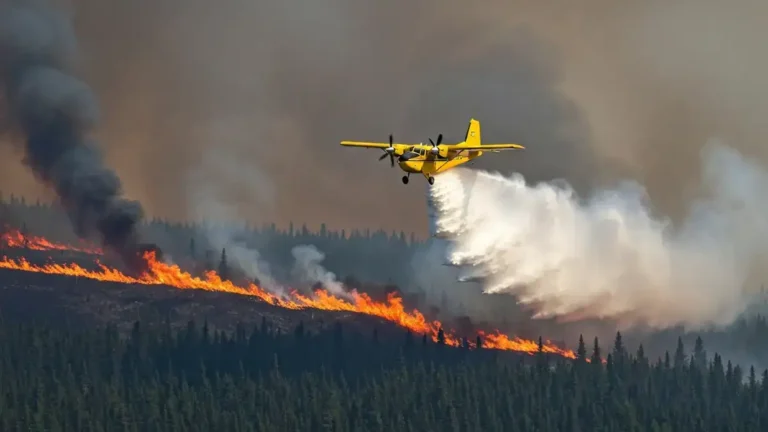
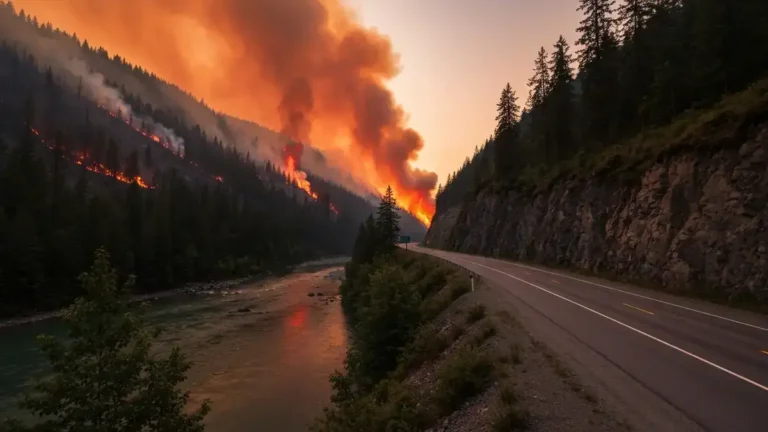
The numbers are stark. Globally, nearly all of the worst wildfire years on record have occurred since 2020. Fires have surpassed logging, disease, and development to become the largest single driver of forest loss worldwide. In 2026, Europe is again battling deadly blazes while Canada’s season, at least so far, has remained comparatively manageable — a contrast that invites a closer look at what is different here, and what could still go wrong.
For BC’s timber contractors, silviculture operators, and land managers, wildfire is no longer a background risk. It is a business continuity issue, a liability question, and increasingly, a compliance and stewardship obligation. The good news — and there is good news — is that the forestry sector already holds many of the tools needed to meaningfully reduce that risk. The challenge is applying them consistently and at scale.
What the FSC Now Requires
The Forest Stewardship Council (FSC), whose certification standards cover millions of hectares of BC and Canadian timberland, has made wildfire risk management an explicit component of responsible forest stewardship. FSC-certified forest managers are required to assess natural hazard risks, including wildfire, and to implement mitigation activities appropriate to their operating context.
Importantly, FSC’s national forest stewardship standards account for regional environmental conditions. What constitutes adequate mitigation on BC’s wet coast differs substantially from what is required in the dry Interior or in the boreal north. The standard is not prescriptive in a one-size-fits-all sense — but it is clear that doing nothing is not an option for certified operators.
This formalises what experienced BC foresters have long understood: stand structure, fuel load, and landscape connectivity are not just ecological variables. They are risk parameters.
The Mechanics of Fuel Management
Wildfire intensity is governed by three primary factors: fuel load, weather, and topography. Foresters can do little about the latter two, but fuel load is directly within their influence.
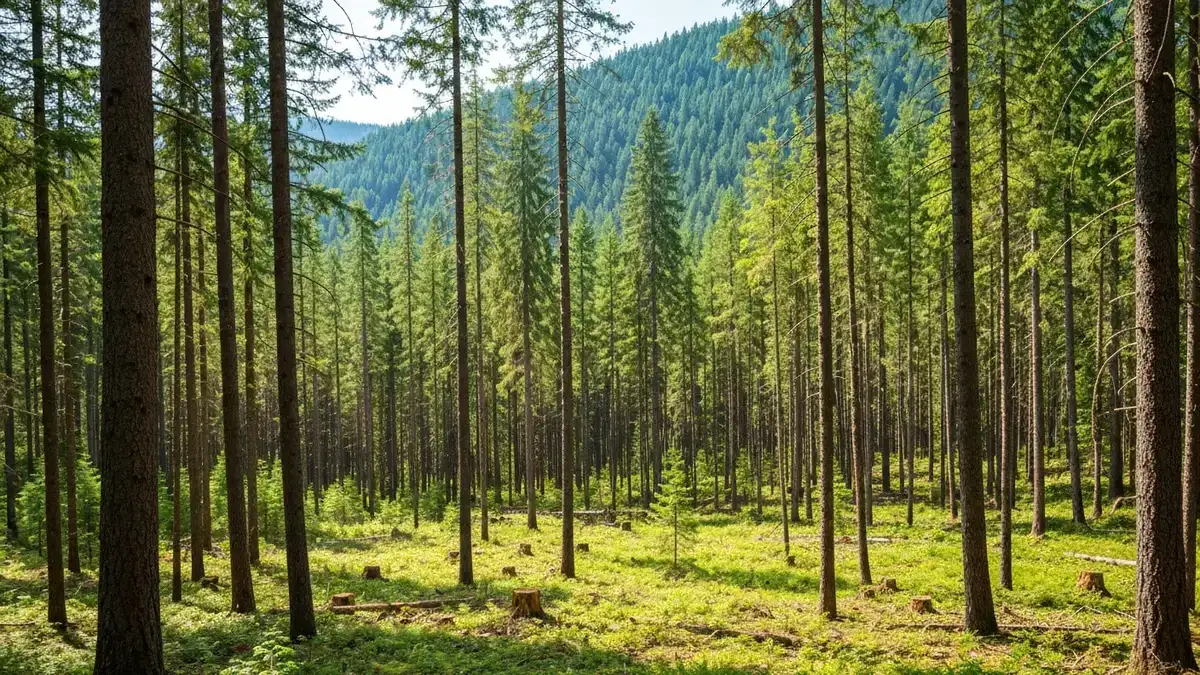
Thinning reduces stand density, which in turn lowers the volume of combustible material per hectare and reduces crown fire risk by separating tree canopies. Thinned stands also tend to retain more soil moisture, which further reduces ignition potential. Research across western North American forests consistently shows that thinned stands experience significantly lower fire severity when fires do occur.
Prescribed burns remove accumulated surface fuels — duff, slash, and understory debris — that have built up over decades of aggressive fire suppression. BC’s historical fire suppression policy, while protecting timber values in the short term, created a legacy of elevated fuel loads that now act as an accelerant when conditions align. Prescribed burning under controlled conditions is the most cost-effective way to address that legacy at scale, and BC Wildfire Service has been expanding its prescribed burn program in recent years, though capacity remains constrained.
Fuel breaks and interface management create strategic gaps in the landscape that slow fire spread and give suppression crews a defensible perimeter to work from. For operators whose tenures include wildland-urban interface (WUI) zones, the creation and maintenance of fuel breaks is increasingly being recognised — by insurers, by regulators, and by municipalities — as a baseline expectation rather than an optional enhancement.
Debris management following harvesting operations is a factor that is often underweighted. Slash piles left on site after a cutblock harvest represent a concentrated ignition risk. Best practice increasingly calls for timely burning, chipping, or dispersal of slash rather than leaving it to accumulate.
BC’s Compounding Risk Picture
BC forest companies are already navigating a difficult operating environment: mill curtailments, trade uncertainty, and sustained market pressure have reduced the sector’s margin for error. Wildfire adds another layer. A severe fire season can interrupt harvesting schedules, destroy standing timber before it is harvested, damage or destroy road infrastructure, and trigger tenure-area restrictions that halt operations.
It is also worth noting that the economic case for fuel management is strengthened when viewed across the full landscape. A single large fire can cost hundreds of millions of dollars in suppression, not counting timber losses, infrastructure damage, and community impacts. Proactive fuel management — thinning, prescribed burns, interface work — costs a fraction of that. The challenge is that the costs of management fall on operators and government today, while the benefits are diffuse and probabilistic.
That calculus is beginning to shift. Insurers are adjusting premiums based on proximity to unmanaged fuel loads. Timber Supply Reviews increasingly factor in wildfire-related timber availability risk. And certification bodies like FSC are making risk assessment and mitigation a formal standard rather than a best-practice suggestion.
Practical Steps for Operators
BC operators looking to align with both FSC expectations and best-practice wildfire risk management should consider:
– Conducting a fuel load assessment across their tenure area, with particular attention to areas adjacent to communities, roads, and high-value timber.
– Engaging with BC Wildfire Service’s fuel management programs, which offer cost-sharing arrangements for prescribed burn planning and execution.
– Reviewing harvest planning to incorporate slash management requirements and fuel break placement where operationally feasible.
– Documenting risk assessment and mitigation activities in a format that satisfies both FSC audit requirements and potential insurance inquiries.
The Bottom Line
There is no single solution to the wildfire crisis. Climate change, decades of fire suppression policy, and landscape-scale connectivity problems cannot be solved by any individual operator or any single intervention. But responsible forest management — applied consistently, at scale, and adapted to regional conditions — is one of the most evidence-backed tools available for reducing risk.
For BC operators, treating fuel management as a core element of forest stewardship is not just the right thing to do. It is increasingly the expected thing to do, and arguably the smart business decision in a risk environment that is only becoming more demanding.