B.C. Wildfire Crews Brace for Uptick in Fire Activity as Weather Heats Up Again
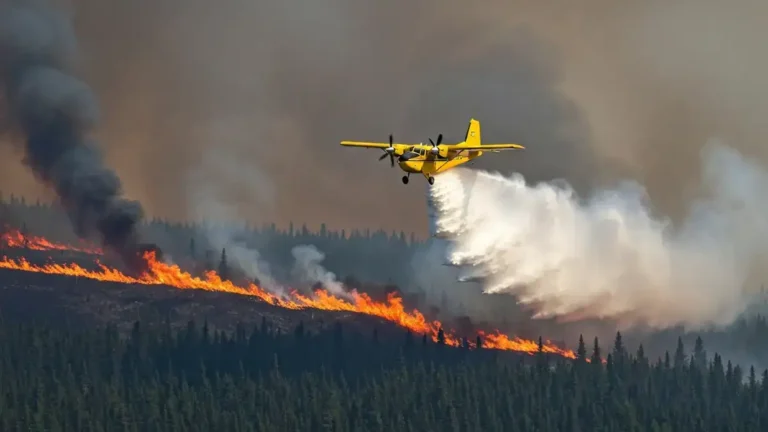
A weekend of rain and cooler temperatures gave BC Wildfire Service crews a window to make direct attacks on active fires — but that window is closing fast. As temperatures climb back toward summer highs across British Columbia’s interior, fire managers are warning that activity levels will escalate quickly, raising serious concerns for forest operators, logging contractors, and mill managers who depend on access to timber-producing lands throughout the province.
Brunswick Complex Holds at 188 Square Kilometres
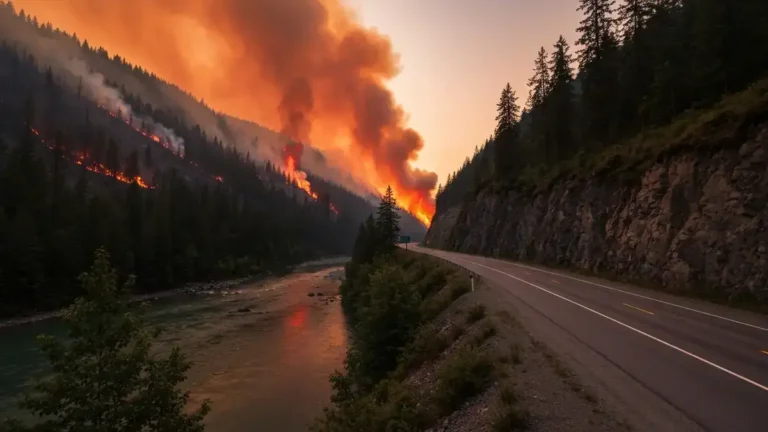
The most significant active fire system in the province’s southern interior right now is the Brunswick Complex, a multi-fire cluster near Boston Bar in the Fraser Canyon. The complex comprises two linked wildfires — the Brunswick Creek fire and the Ainslie Creek fire — which together cover more than 188 square kilometres of rugged terrain.
Over the weekend, the complex held relatively steady in size, largely due to rain and cooler conditions that tamped down fire behaviour. That stability gave BC Wildfire Service crews an operational advantage. Personnel moved to establish fire lines on the southwest flank of the Ainslie Creek wildfire, a tactically important area where the fire’s spread could threaten both infrastructure and additional forest land.
At the same time, crews were working to protect structures near Boothroyd, a small community in the Fraser Canyon that sits in close proximity to the complex’s active perimeter. Structure protection operations of this scale typically involve significant resources and represent a defensive posture — pulling crews away from suppression efforts to safeguard life and property.
Evacuation Alerts Signal Escalating Pressure on Communities
The social and infrastructure pressure from the Brunswick Complex extends well beyond the immediate fire zone. The Thompson-Nicola Regional District issued evacuation alerts for 61 properties near Merritt, reflecting how widely wildfire smoke, spot fires, and shifting perimeters can affect communities across a broad geographic area.
The Nooaitch Indian Band also instructed residents of the main reserve to prepare for potential evacuation on short notice — a precautionary measure that underscores how quickly conditions can change when fire activity intensifies. These alerts, while not yet evacuation orders, require residents and operators to be ready to move within hours if conditions deteriorate.
Returning Heat: What Fire Managers Are Watching
The core concern heading into the coming days is the return of hot, dry weather across the BC interior. Fire behaviour in complex terrain like the Fraser Canyon is highly sensitive to temperature and relative humidity. When daytime highs climb back into the upper 30s and low 40s Celsius — as they are forecast to do — even fires that appeared to be moderating can rapidly expand, produce spotting activity, and generate their own weather systems through pyroconvective columns.
BC Wildfire Service updates consistently flag the transition periods after cool spells as particularly hazardous: fuels that absorbed some moisture during rain events begin to dry out rapidly, and fire crews who made gains under favourable conditions can find those gains erased within a single afternoon of peak burning conditions.
For forest operators, the returning heat means the risk environment for active harvest blocks, equipment in the field, and road access corridors is climbing again.
Implications for Forest Operations
The Fraser Canyon corridor and the broader Thompson-Nicola region are significant to BC’s timber supply. Provincial highways and forest service roads that serve active tenures in this region are vulnerable to both direct fire encroachment and precautionary closures ordered by the Ministry of Forests or BC Wildfire Service when fire danger ratings spike.
Logging contractors and forestry workers should be monitoring BC Wildfire Service fire danger ratings daily in affected zones. Open burning bans — and potentially industrial activity curtailment orders — are tools that fire managers and the province can deploy quickly when conditions warrant. Companies with active operations in or near fire-affected areas should have evacuation and equipment removal protocols current and communicated to crews on the ground.
Beyond immediate operational safety, the timber supply implications of a sustained high-fire season in the southern interior are significant. Areas under evacuation alert or active fire spread can mean harvesting suspensions, potential loss of merchantable timber to fire, and disruptions to log delivery schedules for mills dependent on those areas.
Staying Current
The BC Wildfire Service publishes daily situation reports and fire perimeter maps at bcwildfire.ca. Operators working in or near fire-affected zones should also monitor the Thompson-Nicola Regional District and Interior Health for any updates to evacuation zones and road closures.
With the season’s peak heat weeks still ahead, the Brunswick Complex is a leading indicator — not a one-off event. Forest operators across BC’s interior should be treating the current fire environment as an ongoing operational risk factor, not a background concern.