Wildfire Smoke Is a Major Public Health Threat — What Forestry Workers and Supervisors Need to Know
When Dr. Courtney Howard, an Emergency Physician and President-Elect of the Canadian Medical Association, describes wildfire smoke as “one of the biggest public health threats” facing Canadians, that is not rhetorical flourish. It is a clinical judgment from a physician watching the evidence accumulate in real time — and it carries direct implications for anyone whose job puts them outdoors during smoke season.
For logging crews, skidder operators, fallers, and mill workers with any outdoor exposure, wildfire smoke is no longer an occasional background annoyance. It is a recurring occupational hazard that demands the same structured response as any other worksite health risk.
Why the Biology Makes This Worse Than It Looks
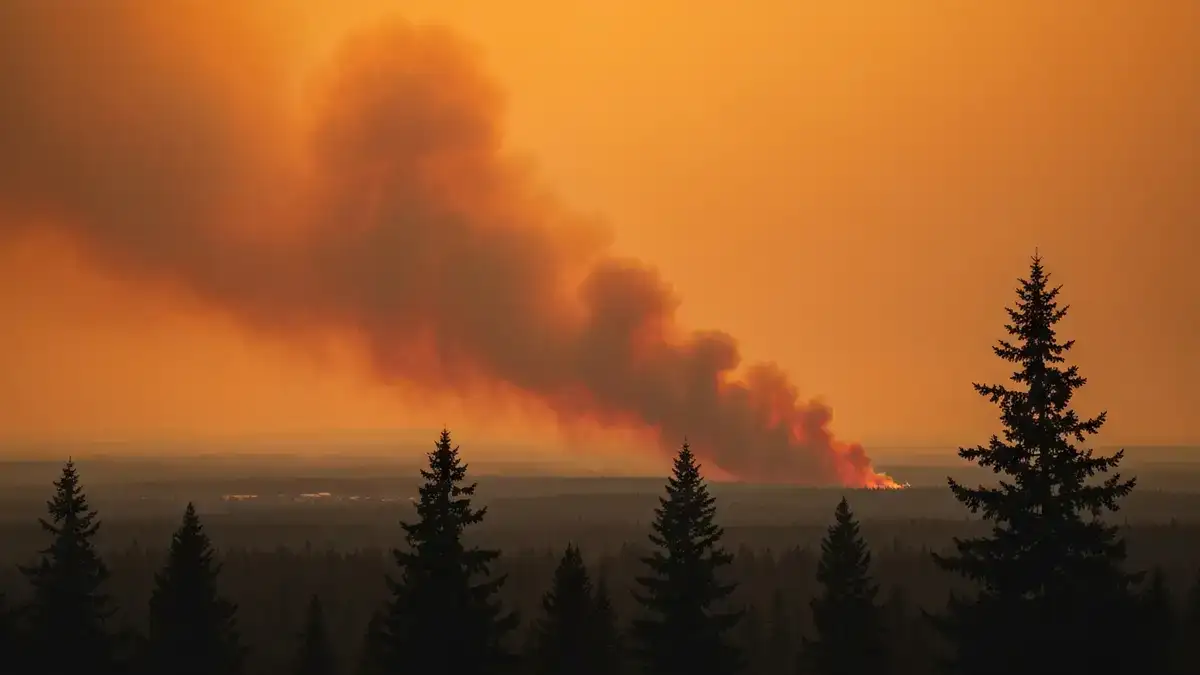
The most important thing to understand about wildfire smoke is what you cannot see.
Smoke contains particulate matter smaller than 2.5 microns — PM2.5. These particles are roughly 30 times smaller than a human hair. At that scale, they are too small to be filtered by the nose and throat, too small to trigger the cough reflex, and small enough to travel deep into the lung’s gas-exchange surfaces — the alveoli — where they deposit and cause inflammation.
Ultra-fine particles, a subset of PM2.5, can go further still. Research has shown that these particles can cross the lung membrane and enter the bloodstream directly, meaning the harm from wildfire smoke is not limited to the respiratory system. Cardiovascular stress, systemic inflammation, and neurological effects are all being studied as downstream consequences.
This is why the familiar symptoms — watery eyes, a scratchy throat — are a poor proxy for actual exposure risk. A worker who feels only mild irritation may still be absorbing a significant particulate load into their lungs and blood.
Who Bears the Highest Risk
Not all workers face equal exposure. Sustained, high-intensity outdoor work during a smoke event combines two compounding factors: more hours outside, and harder breathing.
Physical exertion increases respiratory rate and tidal volume. A faller working in dense smoke is not just exposed longer than an office worker driving through it — they are breathing harder, pulling more air volume through their airways, and depositing more particulate per minute. This dose-response relationship is well established in occupational health literature.
Workers with pre-existing respiratory conditions — asthma, COPD, chronic bronchitis — face amplified risk, as do individuals with cardiovascular disease. But healthy workers with no prior respiratory history are not exempt. The evidence on long-term effects is still developing, and that uncertainty is itself significant.
Emerging research has flagged possible associations between repeated wildfire smoke exposure and elevated rates of lung and brain cancer. Scientists are careful to note that the evidence base remains limited and that more longitudinal research is needed. That caution is appropriate. It is also not the same as saying the risk is negligible — it means the full picture is not yet known, and the precautionary principle applies.
What the Regulatory Framework Requires
In British Columbia, WorkSafeBC’s Occupational Health and Safety Regulation requires employers to assess and control worker exposure to air contaminants, including wildfire smoke. This is not discretionary. When air quality advisories are in effect, employers have a legal obligation to evaluate conditions and implement controls.
The Air Quality Health Index (AQHI) provides the clearest operational trigger. At a rating of 7 or above (High Risk), employers should be considering work modification. At 10+ (Very High Risk), outdoor work for high-exertion tasks warrants serious consideration of suspension or relocation.
Practical controls follow a hierarchy:
Engineering and administrative controls first. Reschedule high-exertion tasks to periods when smoke is lighter (often early morning). Rotate workers to reduce individual exposure time. Move tasks indoors where possible.
Respiratory protection as a supplement, not a substitute. N95 respirators, when properly fit-tested and worn, provide meaningful filtration of PM2.5. Surgical masks and cloth face coverings do not — they are not designed for particulate filtration and provide little protection against fine smoke particles. If respirators are issued, workers need fit testing, training, and an understanding that exertion in an N95 increases breathing resistance and should be managed accordingly.
Documentation matters. If supervisors make a judgment call to continue work during elevated AQHI conditions, that decision and its rationale should be recorded. If conditions change and the decision is revisited, that should be recorded too.
The Precautionary Standard
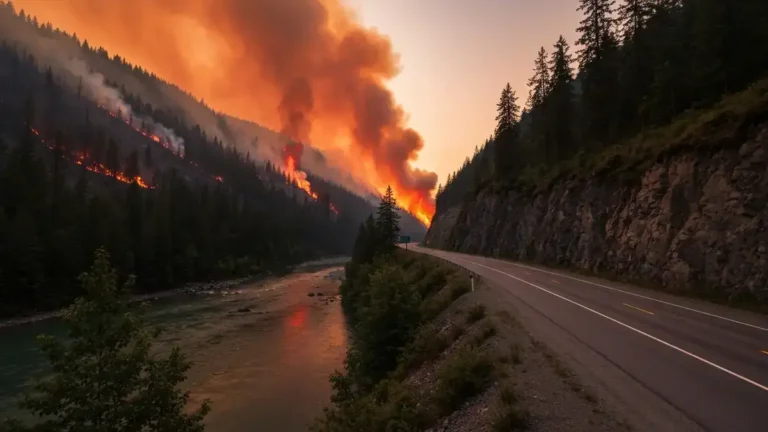
Wildfire smoke is not a new phenomenon, but the scale and frequency of smoke events in Canada has changed materially. The 2026 season has already produced air quality advisories across British Columbia following Fraser Canyon wildfires — and the season is not close to over.
The honest answer from medical science right now is that researchers do not yet have complete data on what repeated, multi-season wildfire smoke exposure does to workers over a 20-year career. What is known is that the mechanism for harm is well understood, that the immediate effects are measurable, and that the potential long-term consequences are serious enough that the Canadian Medical Association is using language it does not use lightly.
Forestry supervisors do not need to wait for a complete longitudinal dataset to act. The obligation to protect workers does not hinge on certainty about the worst-case outcome. It hinges on knowing there is a credible risk — and acting accordingly.