Brunswick Creek Wildfire Forces Boston Bar Evacuation
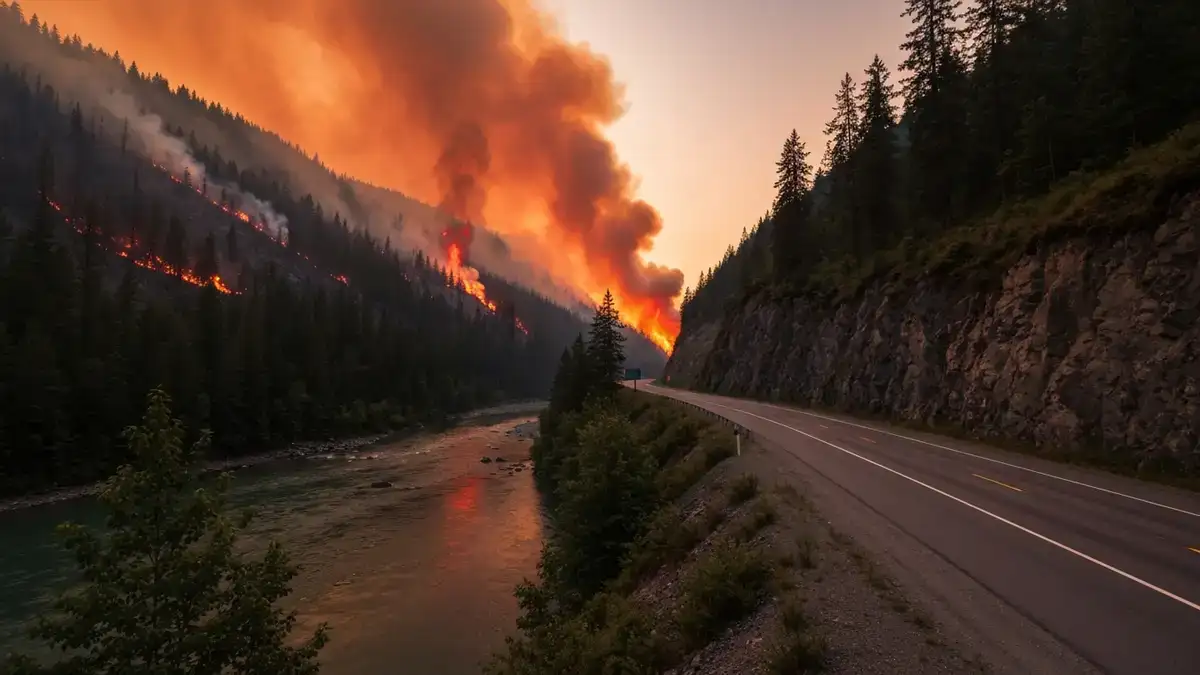
The Brunswick Creek wildfire has pushed British Columbia’s Fraser Canyon into crisis, driving a widening ring of evacuation orders and forcing the remaining residents of Boston Bar to flee. The turning point came when a new, fast-moving fire ignited just south of the community and spread rapidly on strong winds, prompting authorities to order everyone still in town to leave immediately and shutting down a stretch of the Trans-Canada Highway.
Brunswick Creek Wildfire Forces Boston Bar Out
On Tuesday evening, the Fraser Valley Regional District ordered any residents remaining in Boston Bar to evacuate the area immediately, warning that a new wildfire had ignited south of the community and was spreading quickly in gusty conditions. For a small Fraser Canyon town already living under the shadow of the broader Brunswick Creek complex, it was the moment the threat became unavoidable.
The urgency reflected how fast the situation was deteriorating. An evacuation order is a mandatory, immediate directive — not a warning — and issuing one for an entire remaining population signals that officials judged the fire capable of reaching the community with little notice. The order layered onto an already tense stretch of the 2026 season, when crews had been bracing for a surge in fire activity as heat and wind built across the province.
A New Fire That Quadrupled Overnight
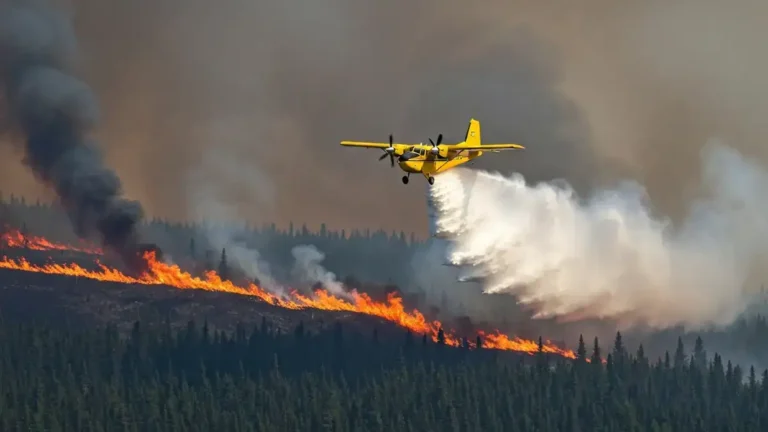
The new blaze did not stay small for long. Starting south of Boston Bar beside Highway 1, it more than quadrupled in size overnight, reaching roughly 43.3 square kilometres — about 4,332 hectares — by Wednesday evening. Fire of that speed, climbing upslope from the valley floor, leaves little margin for a measured response.
That explosive growth is what turned a serious situation into an emergency. The fire’s position right beside the highway meant it threatened not just homes but a critical transportation artery, and its rapid upslope run put timber, crews and infrastructure across the surrounding terrain at risk. The behaviour matched the worst-case scenarios forecasters had been flagging, and it underscored why evacuation timelines in steep canyon country can collapse from days to hours.
Spreading Orders: Hells Gate, Scuzzy Creek and the Alexandra Bridge
As the fire grew, so did the evacuation footprint. As the Brunswick Creek wildfire triggered more evacuation orders, new directives extended to the Hells Gate area, just downstream of Boston Bar where the Fraser River’s flow narrows dramatically, and to properties along the Scuzzy Creek Forest Service Road on the west side of the river. A fresh evacuation alert reached south of Hells Gate all the way to the Alexandra Bridge, a historic suspension bridge built in 1926 — a reminder that the fire is threatening not only homes but landmarks woven into the canyon’s history.
The pattern is characteristic of canyon fires, where terrain funnels wind and flame along the river corridor and forces authorities to expand zones in stages as conditions shift. Each new order and alert widens the circle of people who must pack, register and monitor official channels, and it stretches the emergency-support system that the province stands up to house and feed evacuees. In steep country like the Fraser Canyon, a single wind shift can redraw the map within an afternoon.
These orders sit on top of an already significant toll. The Brunswick Creek wildfire complex — which includes the Brunswick Creek and Ainslie Creek fires that have been burning since early July — had already prompted evacuation orders for roughly 450 properties before this week’s escalation. The smoke pouring off these fires also carries a health cost for anyone nearby, an issue workingforest.com has examined in its coverage of the public-health threat of wildfire smoke for outdoor and forestry workers.
Highway 1 Closure and the Bigger Fire Picture
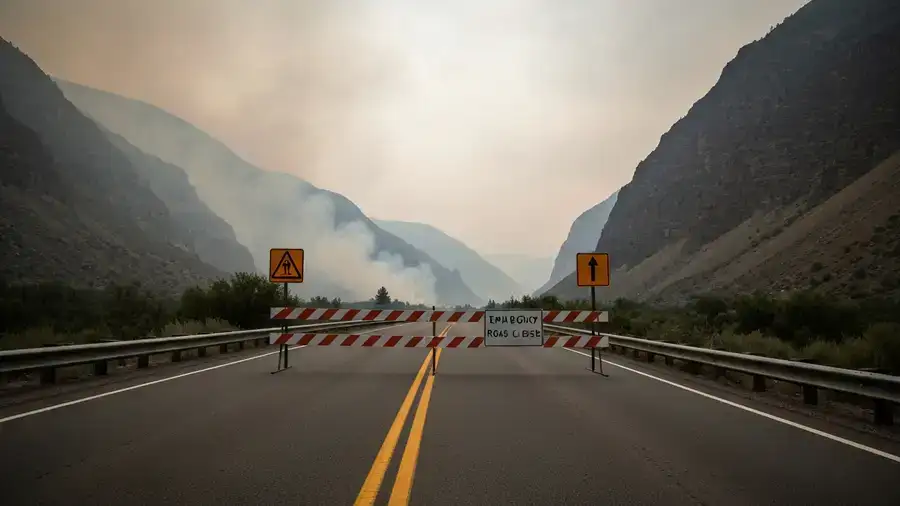
Beyond the evacuations, the fire delivered a direct blow to regional mobility. The fast-moving new blaze forced the closure of the Trans-Canada Highway, severing one of the province’s main east–west arteries through the canyon. For a corridor that funnels freight, fuel and forest products between the coast and the Interior, even a temporary closure ripples outward into supply chains and detours. Log trucks and crew transports that rely on the canyon route face lengthy reroutes, adding cost and delay to an industry already contending with the fire on the ground.
The Brunswick Creek fire is one of the most acute flashpoints in a punishing B.C. season, and its trajectory will hinge on the weather. Hot, dry conditions have repeatedly stoked fears of another destructive summer, echoing past seasons when officials wondered whether the worst was over for B.C.’s worst fire season. For Boston Bar and the communities strung along the Fraser Canyon, the immediate priority is simpler: get out, stay out, and wait for crews to gain the upper hand on a fire that has, for now, the momentum.