Tariffs on Canada: 50% Duties Hit Forest Products

The newest round of U.S. tariffs on Canada arrived not as a single sweeping levy but as a targeted strike across hundreds of product lines — and Canadian forest products are among the casualties. On July 20, 2026, President Trump signed a trio of executive proclamations imposing 50% duties on a wide swath of Canadian imports, layering fresh pressure onto an industry already squeezed by the long-running softwood lumber dispute. For mill operators, furniture makers and the communities that depend on them, the headline numbers only begin to tell the story.
Tariffs on Canada Escalate With 500-Plus New Categories
The three proclamations apply a 50% rate to a remarkably broad list of goods. According to an independent breakdown of the affected products, the measures reach nearly US$20 billion of Canadian imports — roughly 5.2% of the $382 billion in goods the United States bought from Canada in 2025. The primary reporting on the announcement counted more than 500 product categories swept into the new duties, from furniture and cement to wine, hockey sticks and dairy.
That structure matters. Rather than a blanket national tariff, the White House assembled an itemized list that concentrates pain on specific sectors while leaving the broader trade relationship formally intact. The result is a policy that may register as a modest share of total cross-border trade yet fall heavily on the companies whose products happen to appear on the schedule. Canadian exporters that had reoriented toward value-added manufacturing — precisely the strategy governments have encouraged — now find those finished goods exposed. The tariff design has already begun reshaping the 2026 wood products market on a segment-by-segment basis.
Why Section 338 Is the Unusual Legal Weapon
What makes this escalation notable is not only its size but its legal footing. The administration invoked Section 338 of the Tariff Act of 1930, a Depression-era provision that authorizes tariffs against countries deemed to discriminate against U.S. commerce. Trade lawyers tracking the proclamations noted that this is the first recorded use of Section 338 in nearly a century, reviving a statute that had sat dormant for generations.
The choice of authority carries practical consequences for the forest sector. These Section 338 duties sit alongside — not on top of — the existing Section 232 and softwood lumber measures, which the proclamations explicitly carve out. In other words, raw Canadian softwood lumber that already carries countervailing and antidumping duties is not double-taxed here. Instead, the new tariffs extend the trade fight into the value-added and manufactured end of the wood products chain, where furniture, millwork and finished goods had largely escaped earlier rounds. For an industry that has spent years arguing over stumpage and sawmill economics, the battlefront has quietly shifted downstream.
Where Forest Products Land in the Crosshairs
The government’s own accounting confirms both the reach and the limits of the action. The White House fact sheet on the proclamations lists covered goods spanning furniture, cement, wine and dairy, while carving out exemptions for energy, potash, critical minerals and products already subject to Section 232 tariffs. Oil and gas — the single largest component of Canadian exports to the U.S. — remain untouched, which helps explain why the overall economic hit is contained even as individual sectors reel.
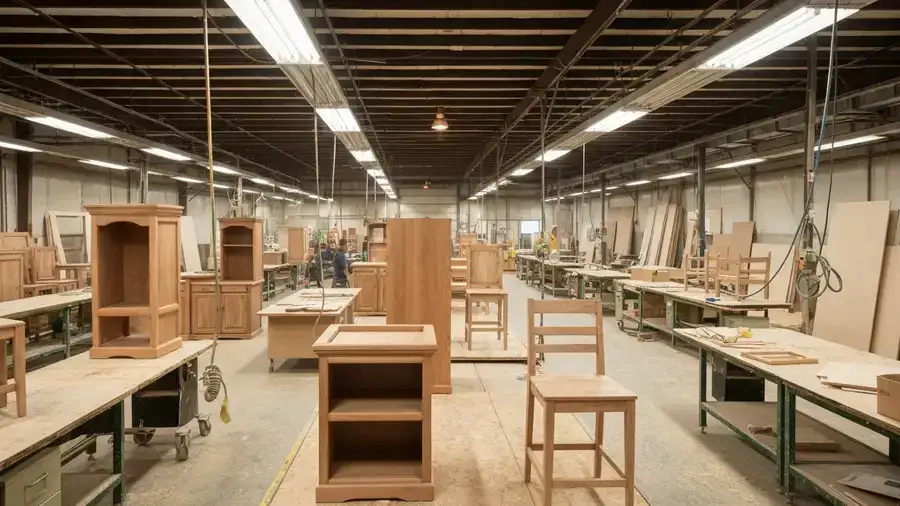
For forest products, the exposure is concentrated in the finished-goods tier. Furniture manufacturers, cabinet and millwork shops, and makers of engineered and decorative wood products face a 50% wall at the border, while their upstream softwood suppliers navigate a separate duty regime. That split threatens to scramble supply chains that move logs, lumber and finished pieces back and forth across the border multiple times. Communities in British Columbia and across the country are already contending with the fallout, part of a broader B.C. forestry crisis marked by mill curtailments and job losses that predate this latest measure.
Industry Reaction and What Comes Next
Industry leaders were quick to condemn the move. The Forest Products Association of Canada, which represents the country’s wood, pulp and paper producers, framed the expansion as a blow to an already strained sector.
“Expanding the tariffs is deeply disappointing.”
— Derek Nighbor, President and CEO, Forest Products Association of Canada, Treefrog Creative / Globe and Mail
The tariffs take effect 30 days after signing, giving exporters and importers a narrow window to adjust orders, reroute shipments or absorb costs. That clock also opens space for negotiation and retaliation. Ottawa has a track record of responding forcefully to U.S. trade actions, having previously weighed retaliation against earlier lumber tariffs with penalties of its own. Whether this round follows the same path — or becomes a bargaining chip in a wider deal — will shape the outlook for Canadian mills through the back half of 2026.
For now, the message to the forest products sector is clear: the trade war is no longer confined to raw softwood. With finished wood goods pulled into a 50% tariff net through a rarely used century-old statute, Canadian producers face a new front in a fight that shows no sign of cooling.