Carney Convenes Wildfire Incident Response Group
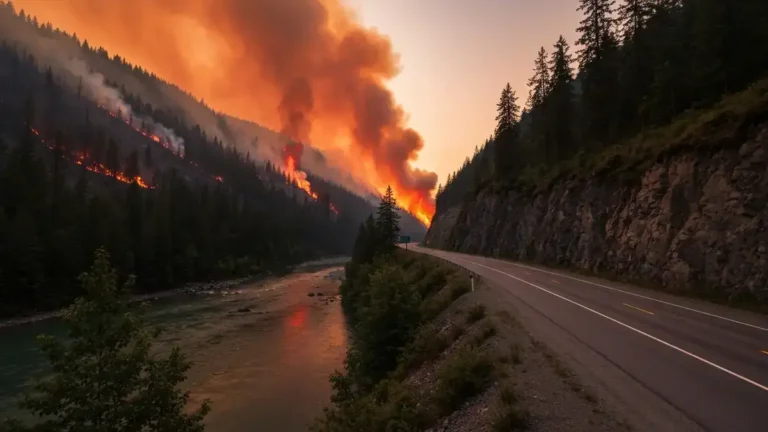
As wildfires rage across every corner of the country, the federal government has moved to the centre of Canada’s emergency response. Prime Minister Mark Carney convened the Incident Response Group — the cabinet-level body used to manage national crises — to address a wildfire situation that has forced thousands from their homes and stretched firefighting resources from coast to coast to coast.
Carney Convenes the Incident Response Group
Carney brought ministers and senior officials together for the Incident Response Group specifically to take stock of the escalating wildfire emergency. The IRG is not a routine meeting; it is the mechanism Ottawa reserves for fast-moving events that demand coordinated federal action, and convening it signals that the government views the current fire season as a national emergency rather than a series of regional incidents.
The group was briefed on the scale of the crisis and on the federal government’s ongoing coordination with affected provinces and Indigenous leadership. Carney used the session to direct officials to keep working closely with provincial, territorial and Indigenous partners, and to reiterate a commitment to deploy every resource needed to keep Canadians safe. That whole-of-government framing reflects how severe the season has become, following a national trajectory that saw 2025 rank as the second-worst fire season on record.
Convening the IRG also carries a practical purpose beyond symbolism. It puts the ministers responsible for public safety, defence, Indigenous services and natural resources in the same room to make fast decisions about deploying federal assets — from military aircraft to interagency coordination — and to cut through the jurisdictional seams that can slow a multi-province response. In Canada’s system, wildfire suppression is primarily a provincial and territorial responsibility, with Ottawa stepping in when a province formally requests assistance or when an emergency outstrips local capacity. The IRG is the venue where those requests are triaged and matched to resources, which is why its activation is a signal that the federal government is treating the situation as a coordinated national effort rather than a patchwork of separate provincial fights.
Hundreds of Fires, Coast to Coast
The numbers behind the meeting are stark. The group was briefed on hundreds of active fires burning across the country — in every province and territory — a simultaneous, nationwide outbreak that leaves little slack in the system. When fires flare everywhere at once, the usual practice of shifting crews and aircraft from a quiet region to a busy one becomes far harder, because there are few quiet regions left.
That breadth is what elevates the situation from a provincial matter to a federal one. Provinces and territories hold primary responsibility for fighting fires within their borders, but a countrywide emergency can quickly exceed any single jurisdiction’s capacity, prompting requests for federal help and mutual aid. The strain is compounded by the health impacts of pervasive smoke, an issue felt acutely in hard-hit regions such as Northwestern Ontario.
Federal Support for Ontario Evacuations
Nowhere is the pressure greater than in Northwestern Ontario. More than 3,000 people from over a dozen communities, including a number of First Nations, have already been evacuated this month as fires bear down on remote, often fly-in communities. For these communities, evacuation is not a matter of driving away — it requires organized air transport, which is exactly where the federal government has stepped in.
The Incident Response Group discussed Ottawa’s coordination with the Government of Ontario and First Nations leadership, including support provided in response to Ontario’s formal Request for Federal Assistance for air evacuation operations. Ontario’s own firefighting effort, detailed in coverage of the province’s actions to fight its wildfires, is being backstopped by federal resources as the evacuation load grows. That layering of provincial and federal capacity is the practical machinery behind a national response.
The Resources on the Ground
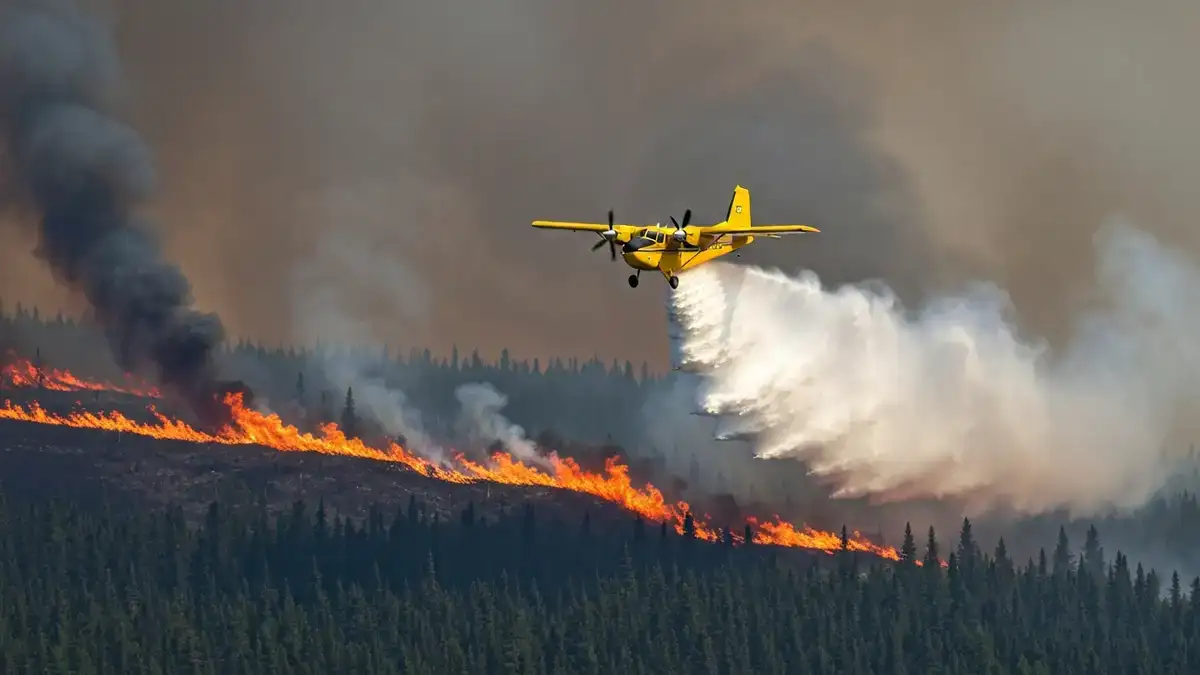
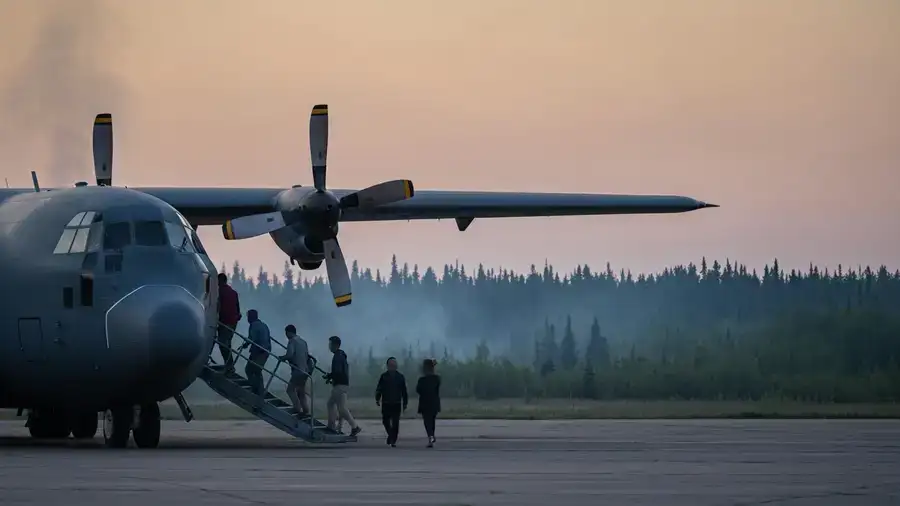
Behind the statements is a substantial deployment. Roughly 300 water bombers, helicopters, and reconnaissance and evacuation aircraft are actively supporting wildfire operations across the country — an air armada assembled to both fight fires and move people out of harm’s way. The Canadian Armed Forces have joined the effort directly, deploying four CC-130 Hercules aircraft to support 13 evacuation flights from Eabametoong First Nation, also known as Fort Hope.
Those Hercules flights illustrate what federal assistance looks like in practice: military logistics filling a gap that overwhelmed local and provincial capacity, moving vulnerable residents from a remote community to safety. Carney’s message from the Incident Response Group was that this support will continue as long as it is needed, with the federal government committed to strengthening Canada’s forest management and wildfire response capacity for the seasons ahead. For now, the priority is immediate — keeping people safe as one of the most intense fire seasons in memory grinds on. With the federal machinery fully engaged, the challenge will be sustaining that effort through the weeks of fire weather still to come.