Louisiana Wood Pellet Bill Faces Carbon Storage Debate

A piece of Louisiana wood pellet legislation 2026 observers had largely expected to sail through the capitol is running into an unexpected obstacle — and the opposition is coming from within the same building pushing it forward. The Louisiana Wood Pellet Manufacturing Strengthening Act passed a House committee unanimously on March 17, yet dozens of bills filed by the same legislature could gut the carbon infrastructure the wood pellet industry says it cannot survive without. What looks at first like a straightforward economic development push is, beneath the surface, a collision between two incompatible policy directions.
Louisiana’s Wood Pellet Industry at a Crossroads
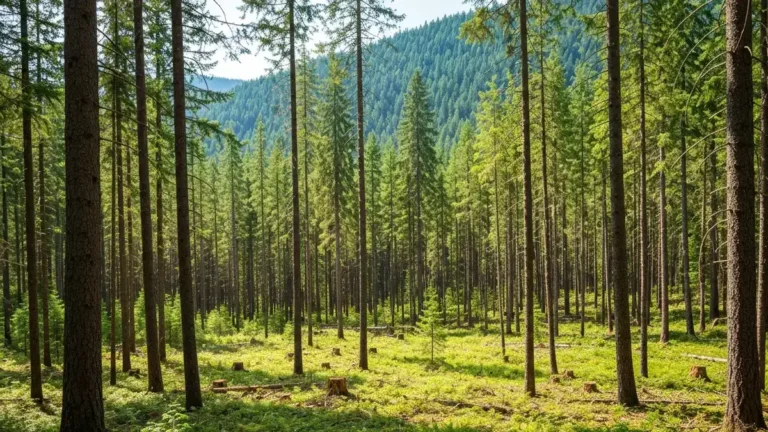
Louisiana sits at the heart of the American South’s wood pellet export economy. Mills clustered across the state’s pine belt feed a global supply chain that delivers compressed wood fuel to power stations in Europe and Asia, where regulators classify it as a renewable energy source. For mill operators, the industry represents thousands of direct and indirect jobs in rural parishes that have few comparable economic anchors.
The Louisiana Wood Pellet Manufacturing Strengthening Act, sponsored by Republican Reps. Chuck Owen of Rosepine and Rodney Schamerhorn of Hornbeck, would direct Louisiana Economic Development to actively promote the growth and expansion of wood pellet manufacturing across the state. House Bill 670 cleared the House Commerce Committee on a 13–0 vote on March 17, 2026, before being recommitted to the House Appropriations Committee the following day — a routine procedural step that nonetheless signals the bill still has ground to cover.
The industry’s longer-term viability, however, is tied to a concept that goes well beyond milling operations: bioenergy carbon capture and storage, or BECCS. Under this model, mills and associated power generators capture the CO2 released when wood is burned and inject it underground, achieving what proponents describe as net-negative emissions. Without access to viable carbon storage geology — and the regulatory environment to support it — the BECCS model falters. That is where Louisiana’s policy picture becomes complicated. The broader carbon-neutral debate around wood pellets has long divided scientists and environmentalists, but in Louisiana in 2026, it is dividing legislators.
Two Dozen Bills Targeting Louisiana Wood Pellet Legislation 2026 and Carbon Storage
While the Wood Pellet Manufacturing Strengthening Act was advancing through committee, nine Louisiana legislators were simultaneously filing nearly two dozen bills that would restrict carbon storage projects or require local referendums before any new CO2 injection infrastructure could be approved. The sheer volume of opposition legislation — spread across a single session — reflects how deeply the politics of underground carbon storage have shifted in the state.
The concern driving many of these bills is pipeline safety. The February 2020 rupture of a CO2 pipeline near Satartia, Mississippi sent dozens of residents to hospitals and prompted an evacuation — an incident that sharpened public wariness about CO2 transport and injection infrastructure in the broader region. Community groups across rural Louisiana have channeled similar anxieties into pressure on legislators, and that pressure has produced results.
The consequences for the wood pellet industry are already tangible. A proposed $2 billion bioenergy project in Beauregard Parish — precisely the kind of investment Louisiana lawmakers say they want to attract — was eliminated after investors lost confidence in the state’s commitment to permitting CO2 storage. That single project withdrawal illustrates the real economic cost of the policy standoff, and it will not be the last if the legislative environment for carbon infrastructure remains hostile.
Drax, the English renewable energy company operating two Louisiana mills, has been direct about where it stands. The company publicly supports integrating carbon capture and storage into its Louisiana operations, positioning itself as a long-term actor that sees BECCS as essential rather than optional. Its advocacy has not yet moved the needle in the legislature.
Lawmakers’ Alternative Arguments
Rep. Owen’s opposition to the carbon storage approach is, at minimum, philosophically consistent with his record. Speaking to the Louisiana Illuminator, he offered a blunt summary of his position:
“I am 100% against the notion that we have to decarbonize.”
— Rep. Chuck Owen (R-Rosepine), Louisiana Illuminator
Owen and fellow sponsor Rep. McCormick have pointed instead to enhanced oil recovery — a process in which CO2 is injected into depleted oil reservoirs to boost extraction — as a more commercially grounded alternative to dedicated carbon sequestration. A related concept sometimes discussed is “carbon to concrete,” in which captured CO2 is mineralized into building materials rather than stored underground. Rep. Schamerhorn has gone further, arguing that Louisiana’s overall business environment should be sufficient on its own to sustain the wood pellet industry without any carbon storage component.
The industry disputes that framing. The argument from operators like Drax is that access to carbon storage is not a bonus feature of the BECCS model — it is the model. Alternatives like enhanced oil recovery serve different commercial and regulatory functions, and the debate over burning wood pellets for overseas electricity markets increasingly depends on lifecycle emissions accounting that only genuine sequestration can satisfy.
Meanwhile, environmental observers note that the track record of carbon capture more broadly gives reason for skepticism. Abel Russ of the Environmental Integrity Project offered pointed context on the federal subsidy picture:
“Between 80 and 90% of carbon capture projects approved for taxpayer subsidies so far have been for enhanced oil recovery.”
— Abel Russ, Environmental Integrity Project, WWNO

Louisiana Leads the Nation in Proposed Carbon Projects
The irony of the current standoff is that Louisiana is, by almost any measure, the most significant carbon capture state in the country — on paper. According to WWNO’s reporting, Louisiana accounts for 65 of the approximately 270 proposed carbon capture and sequestration projects nationwide, more than any other state. Combined, those proposed facilities aim to capture at least 33 million metric tons of CO2 annually and inject at least 135 million tons into underground geological formations each year.
The reality on the ground is far more modest. Only two operational carbon capture sites currently exist in the state: a CF Industries ammonia plant in Ascension Parish and a New Generation gas processing plant in Beauregard Parish. The gap between 65 proposed projects and two operating sites reflects years of permitting delays, financing uncertainty, and now an increasingly hostile legislative climate.
Governor Jeff Landry’s decision in October 2025 to impose a moratorium on new CO2 injection permits — while carving out existing permits — added another layer of uncertainty to an already complicated environment. The moratorium was framed as a pause for review, but for developers who had been advancing projects in anticipation of Louisiana’s favorable geology, it functioned as a stop sign.
For the wood pellet industry, the question is whether the Louisiana legislature can resolve the contradiction it has created. Advancing a bill to grow wood pellet manufacturing while simultaneously pushing to restrict the carbon infrastructure that makes the industry’s long-term export model viable is not a sustainable policy position. The 2026 session may not produce a resolution, but it has made the conflict visible — and unavoidable.