Conservation Easement Locks In 22,000 Acres of Idaho Timberland
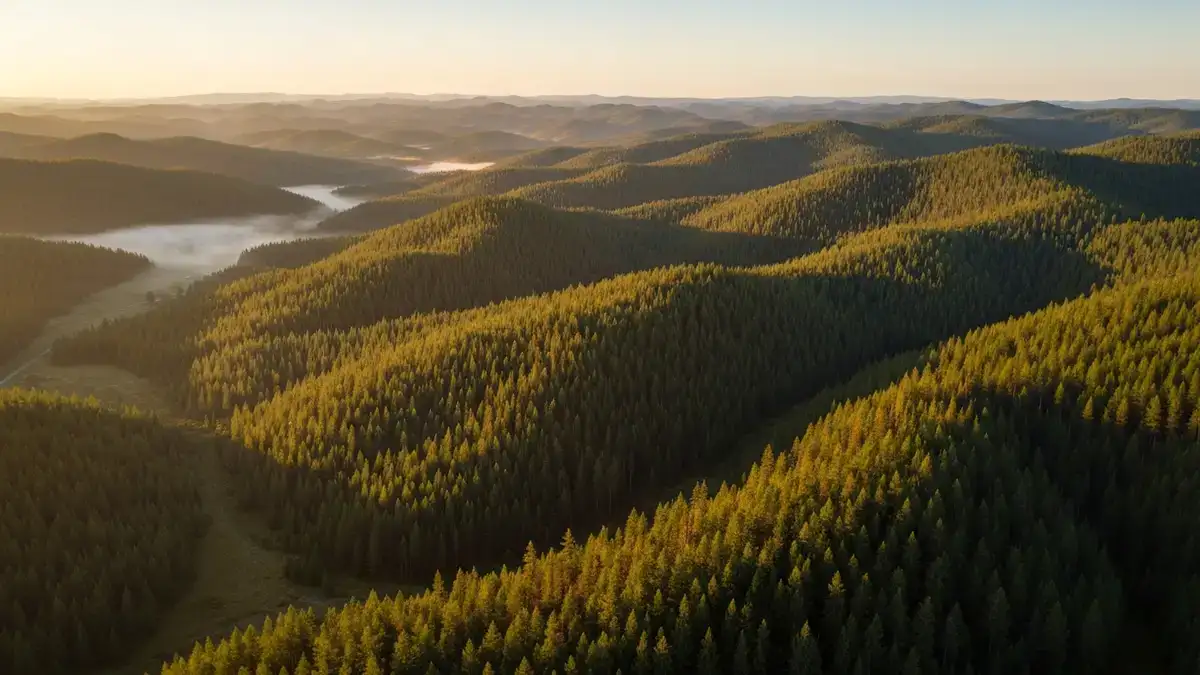
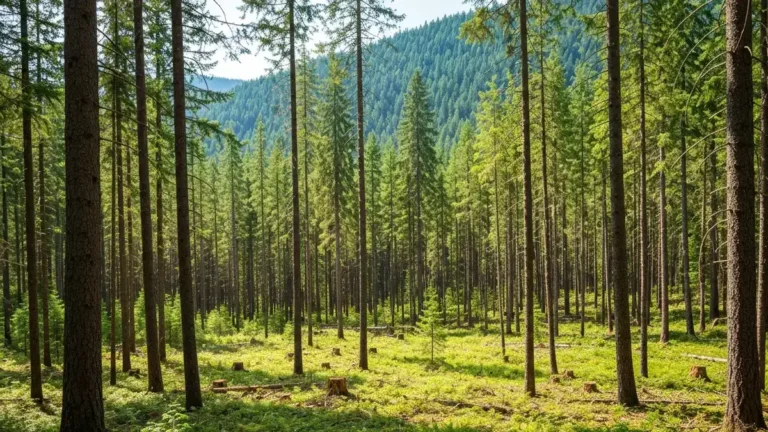
A conservation easement covering more than 22,000 acres of Idaho timberland between Mount Spokane and Spirit Lake has permanently barred the land from residential and commercial development — while keeping the saws running. The deal, announced in late March 2026, is the largest single conservation action in the region in years and represents the opening move in a plan to protect more than 40,000 additional acres across the Idaho-Washington border country.
The property belongs to Inland Empire Paper Company, a wholly owned subsidiary of Cowles Co. Through the easement, Inland Empire sold its development rights to the state of Idaho — relinquishing the ability to subdivide or convert the land — while retaining full ownership and continuing to harvest timber under its existing management plan. The development rights were valued at approximately $34 million.
How the Conservation Easement Works
A conservation easement is a voluntary, legally binding agreement in which a landowner permanently transfers specific land-use rights to a government agency or land trust. The landowner keeps title to the property, continues paying property taxes, and can sell or pass on the land — but the restrictions follow the deed forever.
In this case, the Idaho Department of Lands (IDL) holds the easement on behalf of the state, partnering with the nonprofit Trust for Public Land and the U.S. Forest Service’s Forest Legacy Program. The federal program awarded $26 million toward the transaction. Inland Empire donated the remaining roughly $8.5 million in value to satisfy the 25 percent nonfederal matching requirement — effectively gifting a share of its development rights to ensure the deal closed.
The effort is formally named the Spirit of Mount Spokane Forest Legacy Project. It covers 22,352 acres spread across Bonner and Kootenai counties, horseshoeing around Spirit Lake on both the north and south sides and running up to Idaho’s border with Washington.
The working-forest model at the heart of this deal is a deliberate policy choice. Rather than transferring ownership to the government — which would pull the land off county tax rolls and end commercial production — the Forest Legacy Program compensates private timberland owners to keep their forests intact and commercially active. Idaho’s Forest Legacy Program has enrolled timber acreage since 2003, and 90 percent of those enrolled acres are now open to public recreation.
For a deeper look at how private timber ownership has shaped the Pacific Northwest, see Washington State’s Wood Products Industry: A Historical Journey.
Protecting Drinking Water for 450,000 People
The conservation easement carries water-security stakes that extend far beyond the property lines. The 22,352-acre tract covers a portion of the Spokane Valley-Rathdrum Prairie Aquifer, a fast-flowing underground formation that serves as the sole source of drinking water for more than 450,000 residents of Spokane and Kootenai counties.
Forest cover is essential to aquifer health. Trees intercept precipitation and allow it to infiltrate slowly into the soil rather than running off as surface water that carries sediment and contaminants. Development on this land — whether residential sprawl or commercial clearing — would increase impervious surface, alter drainage patterns, and raise the risk of groundwater contamination for a water supply with no backup.
Voters within the Spokane Valley-Rathdrum Prairie Aquifer Protection Area approved a 20-year protection measure in August 2025, with 74 percent in favor. The conservation easement on Inland Empire’s timberland is consistent with — and reinforces — that community commitment to safeguarding the region’s water supply.
Wildlife Habitat Secured Along the Idaho-Washington Border
The protected acreage provides habitat for elk, deer, and westslope cutthroat trout, a native species of the Columbia River Basin that depends on cold, clean headwater streams. The terrain between Mount Spokane and Spirit Lake forms part of a broader wildlife corridor linking the Selkirk and Cabinet-Yaak ecosystems — landscapes that support some of the most diverse wildlife assemblages remaining in the inland Pacific Northwest.
The North Idaho landscape faces growing pressure from a decade of accelerating in-migration and rising rural land values. Without a permanent legal instrument like a conservation easement, timberland in this corridor is vulnerable to fragmentation — a process that degrades habitat connectivity and pushes sensitive species out of viable ranges even when individual parcels remain forested. This story is playing out across the region, as documented in Widespread Tree Mortality Threatens Pacific Northwest Forest Health.
Public Access Locked In for Hunters, Hikers, and Recreationists
One feature of this easement that distinguishes it from many conservation transactions is the explicit public-access guarantee. Hikers, hunters, berry pickers, and other non-motorized users can now access the 22,352 acres at no charge — permanently. Those wanting motorized access, such as ATV riders or snowmobilers, will pay a permit fee. This two-tier access structure keeps the land genuinely open to local residents while generating a modest revenue stream tied to higher-impact uses.
The land has functioned informally as public recreation space for decades. The easement converts that informal tolerance into a legal right enforceable in perpetuity.
Phase Two: 40,000 More Acres in the Pipeline
The Spirit of Mount Spokane Forest Legacy Project was designed as a multi-phase effort from the outset. Phase One covers the 22,352 acres announced this month. Plans are already in motion for Phase Two: an application covering the next piece on the Idaho side has been filed and is awaiting a funding decision, while a Forest Legacy Program application for the Washington side of the border has already been approved.
When complete, the project aims to protect more than 40,000 additional acres of Inland Empire timberland in northeast Washington and North Idaho — a total footprint that would make it one of the most significant private-land conservation commitments in the inland Northwest. IDL’s Forest Legacy program manager Jennifer Barker described the initiative as keeping these forests working while permanently protecting public access and ensuring the land remains available for generations.
The approach mirrors a broader shift in Pacific Northwest forest policy: using legal instruments and public-private funding to keep working timberland productive and open rather than converting it to developed or protected-but-closed status. As the Deal would overhaul private forest management in Oregon shows, the pressure to renegotiate the terms of private forest ownership is intensifying across the region. The Idaho model — compensate owners, keep trees standing, guarantee access — offers a replicable template.
The 22,352 acres near Mount Spokane will now stay forested, stay productive, and stay open: a rare alignment of commercial, ecological, and public-access interests that the region’s growing population increasingly depends on.