Biomass Gasification Gets $25M USDA Loan in California

The U.S. Department of Agriculture has approved a $25 million loan guarantee to fund a biomass gasification plant in Calaveras County, California — a project that will convert forestry waste from National Forest lands into synthetic natural gas while removing material that fuels catastrophic wildfires. The announcement, made March 23, 2026, signals a federal commitment to treating California’s chronic wildfire problem and its renewable energy transition as one interconnected challenge rather than two separate policy lines.
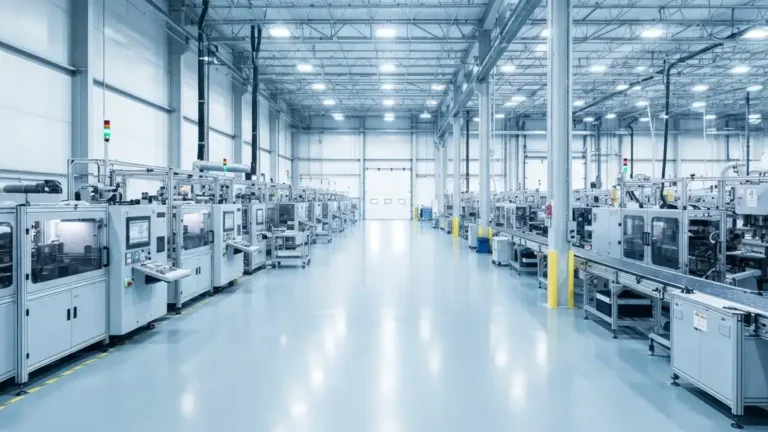
The loan is being issued to Blue Mountain Electric Company, LLC, which plans to construct and operate a 3-megawatt gasification facility in Wilseyville. Total project cost is estimated at $42.2 million. The USDA guarantee covers plant construction and first-year working capital, bridging the financing gap that has historically made small-scale biomass gasification projects difficult to capitalize.
USDA Backs Biomass Gasification in Calaveras County
The $25 million guarantee was issued through the Timber Production and Expansion Guaranteed Loan Program (TPEP), administered by USDA Rural Development. The program is designed to ensure that sawmills and wood processing facilities — including emerging technologies like gasification — have the capital to establish, expand, or modernize operations that clear restoration byproducts from U.S. Forest Service National Forest System lands.
Blue Mountain Electric’s project is one of 12 funded in the March 23 announcement, which distributed $115.2 million across eight states: California, Idaho, Kansas, Louisiana, Maine, Oklahoma, Virginia, and Wisconsin. California captured $61.25 million of that total — the largest state allocation in the round, spread across three separate recipients.
“We cannot allow wildfires to devastate and destroy our rural communities. That’s why the USDA is taking this bold action to stop the destruction of our forestlands by investing in sawmills and wood processing facilities that support sustainable timber harvesting.”
— J.R. Claeys, Administrator, USDA Rural Business Cooperative Service
How Biomass Gasification Works — and Why It Matters for California
Biomass gasification is a thermochemical process that converts woody material — in this case, forestry residues — into a combustible synthetic gas at high temperatures with limited oxygen. Unlike combustion, which simply burns material, gasification produces a gas stream that can be cleaned and upgraded into pipeline-grade synthetic natural gas.
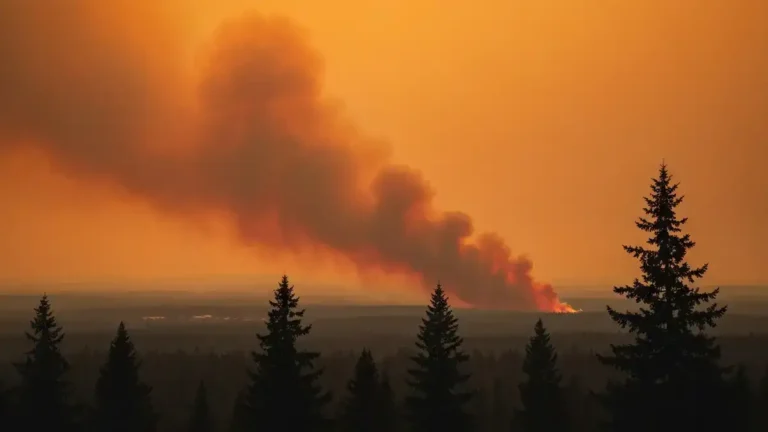
For California, the technology addresses a specific crisis. Decades of fire suppression combined with drought-driven tree mortality have left National Forest lands loaded with dead and dying timber. What’s Killing Forests in California? — a persistent problem driven by climate stress — has left millions of tons of woody material that fire managers either pile and burn or leave to accumulate. Pile burning releases smoke and carbon; doing nothing leaves kindling for the next major fire.
Gasification offers a third path: convert the residue into energy while removing it from the forest floor. The synthetic natural gas produced by Blue Mountain Electric’s plant is intended to be pipeline-grade, meaning it can be injected into existing natural gas infrastructure rather than requiring dedicated end-use facilities.
California’s energy commission has studied this pathway for years, noting that forest-derived renewable natural gas can reduce the carbon footprint of the gas system while providing a market-based incentive to accelerate fuels reduction on public lands. The Blue Mountain Electric project represents a move from study to construction.
California Leads the Nation in TPEP Funding
California’s $61.25 million slice of the TPEP round dwarfs every other state’s allocation, reflecting both the scale of the wildfire risk and the depth of the need for wood processing infrastructure on the West Coast.
Alongside Blue Mountain Electric’s gasification plant, two other California companies received TPEP guarantees: Alpenglow Timber LLC, which received $18.5 million to establish a new sawmill in Nevada County capable of processing wildfire-damaged timber, and Sierra Forest Products Holdings, Inc., which received $17.75 million to expand and modernize its milling capacity in high-priority forest restoration areas.
“After years of severe wildfire impacts across the golden state, California is grateful to receive the largest TPEP investment in the nation. This funding reflects the Trump administration’s commitment to protecting our state from wildfire risks.”
— Bryan Anguiano, California State Director, USDA Rural Development
Across all 12 projects in the national round, USDA estimates the investments will support 485 jobs. The program’s emphasis on facilities that hold USFS contracts for biomass removal from National Forest System lands ensures that lending activity directly funds the labor and equipment needed to reduce wildfire fuel loads — not just wood processing for its own sake.
Forest Health, Wildfire Risk, and the Market for Waste Wood
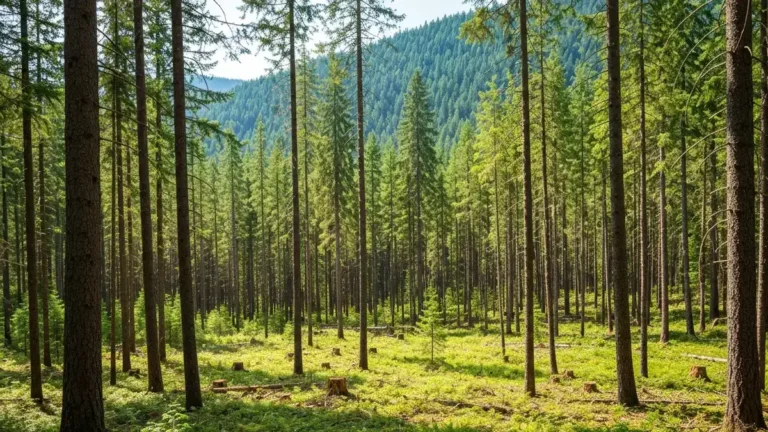
One of the persistent barriers to effective fuels management in California and across the American West is the absence of economically viable markets for the material removed from forests. Timber with commercial value — large-diameter, high-quality logs — has always found buyers. But the residue left behind after a fuels-reduction project — branches, tops, small-diameter wood, and fire-damaged material — has historically had nowhere profitable to go.
That gap undermines the economics of fuels treatment projects. Without a buyer for the low-grade material, the cost of operating crews falls entirely on public budgets, limiting the pace and scale of work that can be accomplished. How Megafires Are Remaking American Forests is partly a story about what happens when the economics of fuels management cannot keep pace with the accumulation of fire risk.
Biomass gasification facilities like the one Blue Mountain Electric plans to build in Wilseyville create exactly the kind of demand-side pull that can make fuels treatment economically self-sustaining. When there is a buyer willing to pay for forest residues — even at low prices — it reduces the net cost of removal, making more treatments viable per dollar of public funding.
“The American forest products industry is critical to maintaining the health of the nation’s forests. The Timber Production and Expansion Guaranteed Loan Program is one of many ways the Forest Service partners with the timber industry.”
— Tom Schultz, U.S. Forest Service Chief
What the Investment Means for Rural Communities
Calaveras County sits in the Sierra Nevada foothills, a region that has experienced some of California’s most destructive recent fire events. For communities in these fire-prone corridors, wood processing facilities represent not only economic activity but also a measure of landscape protection — more treated acres, lower ignition risk, and jobs tied to a sector with long-term relevance as the climate continues to shift.
The TPEP program’s structure reinforces this connection. By requiring that funded facilities hold or pursue USFS contracts for timber removal from National Forest System lands, the program ties loan access to on-the-ground forest management activity. A biomass gasification plant that processes forest restoration byproducts is, in the program’s framework, as much a forest health tool as a renewable energy project.
Whether the Blue Mountain Electric plant reaches its full operating potential will depend on construction execution, feedstock logistics, and the long-term economics of synthetic natural gas in a state already moving aggressively to reduce gas consumption. But the USDA’s willingness to back a $42.2 million project with a $25 million guarantee — and to put California at the center of its largest TPEP round to date — reflects an acknowledgment that capturing the full value of biofuels from forest waste requires federal support to overcome the capital barriers that have kept promising technologies at the pilot stage.
The Wilseyville plant, if built as planned, could become an early example of what an integrated forest health and renewable energy economy looks like in practice in the American West.