BC Wildfires: 600 Properties Under Evacuation Order

British Columbia’s fire season has lurched into a dangerous new phase. A wave of BC wildfires has forced 600 properties under evacuation order and put roughly 5,700 more on evacuation alert, officials said in a Tuesday briefing, after a lightning barrage ignited dozens of new fires across the province. With hot, dry weather in the forecast, emergency managers are bracing for conditions to get worse before they get better.
BC Wildfires Force 600 Properties Under Evacuation Order
The headline figure from the briefing is stark. As CBC reported from the update, 600 properties are now under an evacuation order, meaning residents have been told to leave immediately, while about 5,700 more sit under an evacuation alert, ready to go on short notice. The province said it was already supporting 430 evacuees through emergency social services. An evacuation order and an evacuation alert are not the same thing: an order is mandatory and immediate, while an alert is a warning to be packed and prepared to leave the moment the situation changes. With thousands of households straddling that line, even a modest shift in wind or fire behaviour could convert a large share of those alerts into full orders within hours.
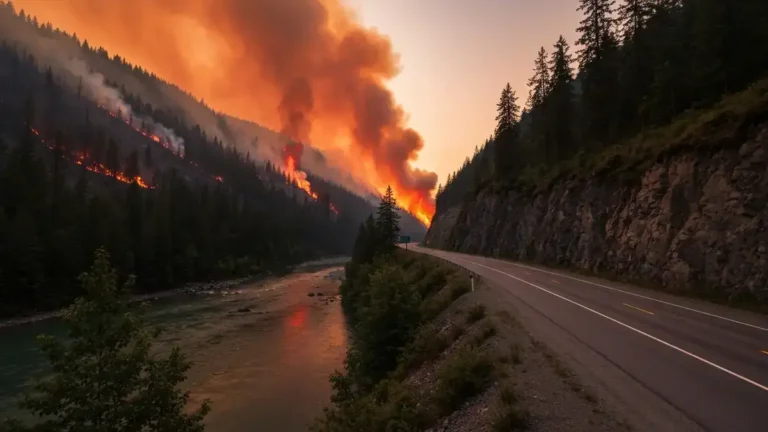
The geography of the crisis is concentrated. Most of the properties under evacuation order are in the Fraser Canyon, the steep, tinder-dry corridor northeast of Vancouver that has repeatedly been a wildfire flashpoint. The bulk of the alerts, by contrast, are clustered around Kimberley in the province’s southeast. Emergency Management and Climate Readiness Minister Kelly Greene urged anyone in a threatened area to pre-register for emergency support services rather than wait until an order arrives — advice that can shave crucial time off an evacuation. The scale of the response echoes earlier warnings, when crews were bracing for an uptick in fire activity as the summer heat built.
A Lightning Barrage Ignites Dozens of Fires
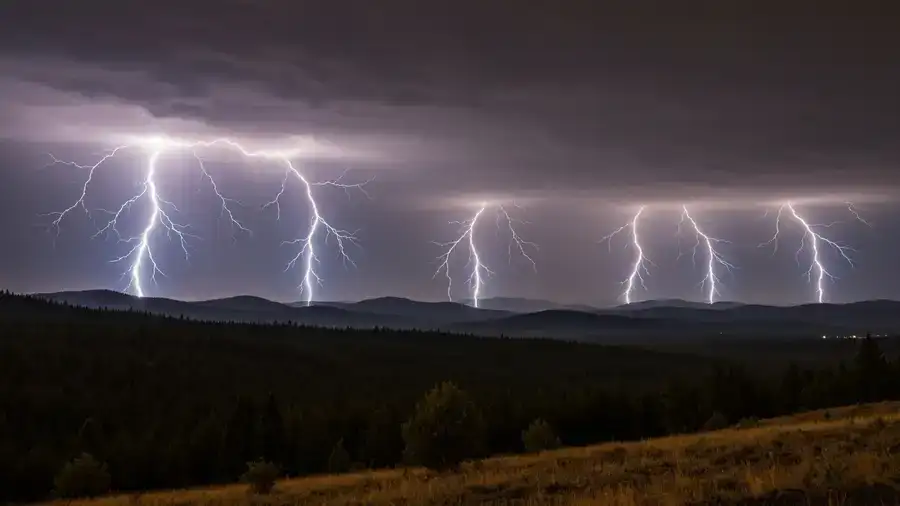
The driver behind the sudden escalation is lightning. The B.C. Wildfire Service recorded close to 34,000 lightning strikes during the final half of the previous week — an enormous count that lit up dry fuels across the province almost simultaneously.
The result was a rapid multiplication of fire starts. As of Tuesday afternoon, 85 fires were burning, and roughly 79% of them were believed to have been ignited by lightning rather than human activity. That ratio matters for how the season unfolds: lightning-caused fires often ignite in remote, hard-to-reach terrain and can flare up far from road access, complicating the initial attack. For readers trying to make sense of ignition patterns, workingforest.com has explored what tends to start Canada’s wildfires and why lightning looms so large in the Western fire picture.
The Fires of Note and Where They’re Burning
Several fires stand out among the dozens now burning. Two new evacuation orders were issued Monday for the Downing Park area southwest of Clinton because of the Pear Lake wildfire. Near Boston Bar, in the Fraser Canyon, the Ainslie Creek and Brunswick Creek fires are among those driving the evacuation orders. In the southeast, the Matthew Creek and Tower Creek 2 fires near Kimberley are behind much of the alert activity there. Officials flagged those four as the fires of note, a designation the B.C. Wildfire Service reserves for blazes that are highly visible or pose a heightened threat to people and property.
Taken together, these fires trace the two pressure points of the current emergency — the Fraser Canyon in the south-central Interior and the Kimberley area in the Kootenays. Residents and industry alike can track active incidents through tools such as a tech dashboard built to follow B.C. wildfires, which maps fire locations and status in near real time. For a forest sector whose crews, contractors and timber supply are directly in the path of these fires, that situational awareness is more than a convenience.
What Comes Next: Challenging Weather Ahead
The near-term outlook offers little relief. Forecasters are calling for continued hot, dry conditions with limited rain across the southern half of the province — precisely the recipe that turns new lightning starts into major fires. With crews already stretched across 85 active incidents, any additional lightning or wind events could push the situation further, forcing difficult choices about where to concentrate limited air tankers, ground crews and structure-protection resources.
For now, the message from officials is preparedness: know your evacuation route, keep an emergency kit ready, pre-register for support, and treat an alert as a signal to be ready to leave at a moment’s notice. The 2026 B.C. wildfire season has clearly entered its most volatile stretch, and with 600 properties already emptied and thousands more on notice, the coming days will test both firefighting resources and the resilience of the communities in the fire’s path.