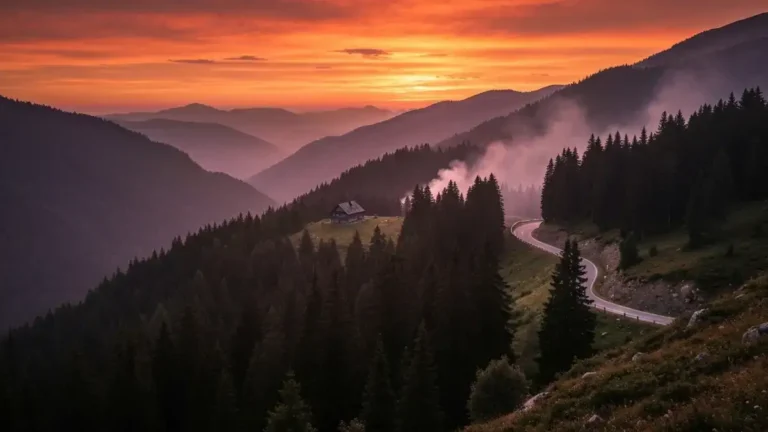
Osoyoos Indian Band Plants 900K Trees to Restore Land
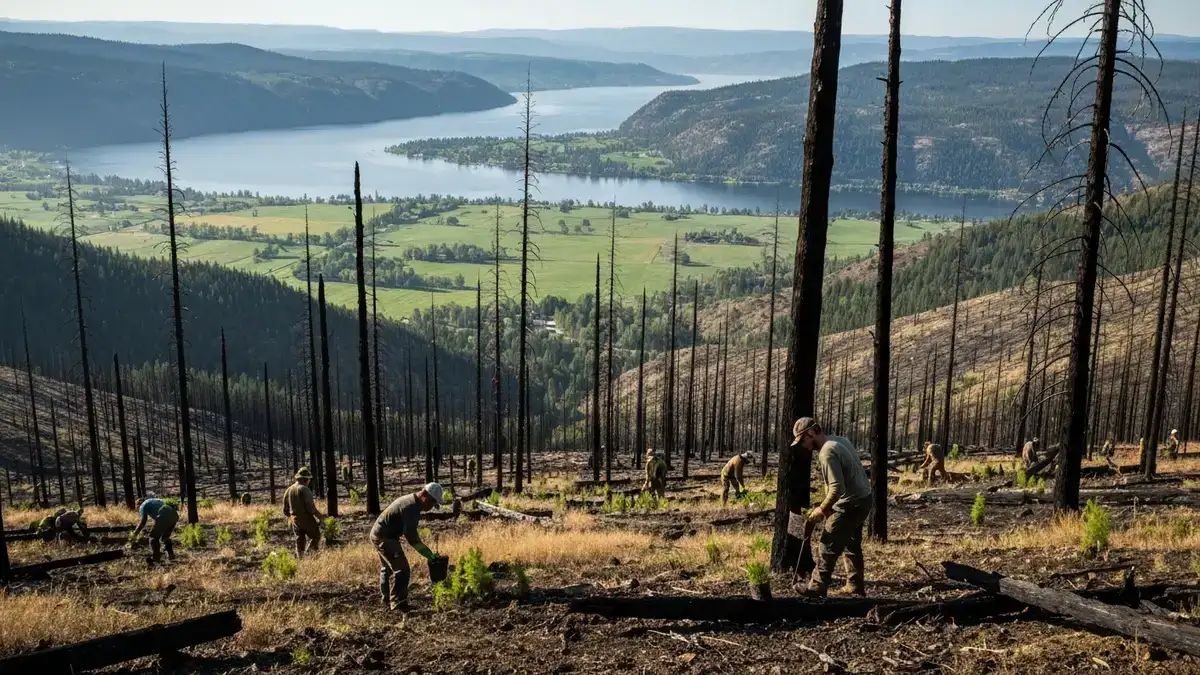
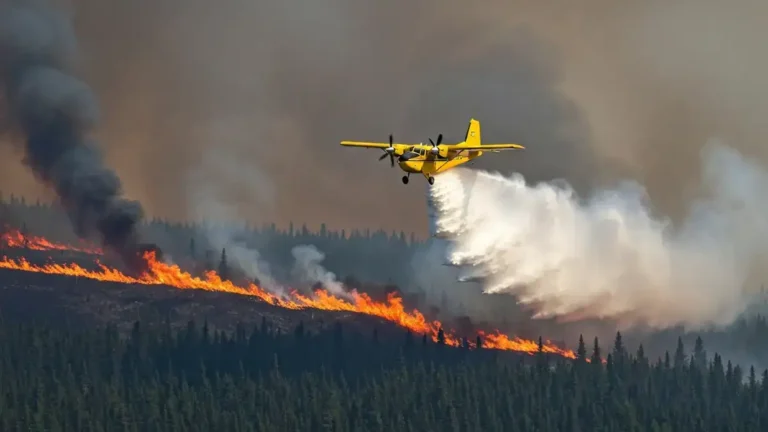
Amid a summer dominated by wildfire headlines, the Osoyoos Indian Band is writing a different kind of fire story — one about recovery. Through its forestry arm, the Band has planted more than 900,000 trees and native plants across its territory in southern British Columbia this year, restoring land scorched by wildfire and giving forests a head start where nature has struggled to recover on its own.
Osoyoos Indian Band Restores Wildfire-Scarred Land
The work is being led by Nk’Mip Forestry, with support from Siya Forestry, as part of the federal 2 Billion Trees Program. The 900,000-plus trees and native plants set so far this year represent a major restoration push across Osoyoos Indian Band territory in the Okanagan, an arid landscape where re-establishing forest cover is far from guaranteed.
The initiative is notable not just for its scale but for its ownership. This is an Indigenous-led restoration effort on Indigenous land, pairing traditional stewardship with the resources of a national reforestation program. It sits within Canada’s broader ambition, launched when the federal government unveiled its plan to plant two billion trees, to expand and repair forest cover across the country.
Rebuilding After the 2021 Nk’Mip Creek Wildfire
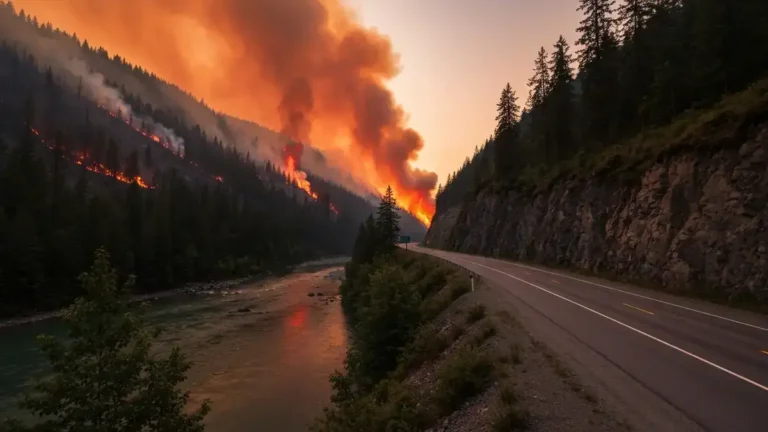
The restoration focuses on areas damaged by wildfire and other disturbances — chief among them land severely burned during the 2021 Nk’Mip Creek wildfire, where the forest has not been coming back on its own. In many burned landscapes, seeds in the soil and surviving trees allow a forest to regenerate naturally over time. On these sites, that process stalled, leaving ground exposed and vulnerable.
“These sites were severely burned by the 2021 Nk’Mip Creek wildfire and were not regenerating on their own. By planting now, we can help establish mixed-species forests that are better suited to future environmental conditions.”
— Peter Flett, head of operations, Nk’Mip Forestry, Castanet
Flett’s point captures the logic of active restoration: where natural regeneration fails, deliberate planting can restart the forest and steer it toward species better matched to a warming, drying climate.
The Okanagan makes that challenge especially acute. It is one of the driest regions in Canada, and after a high-severity burn, the combination of scorched soils, lost seed sources and hot, arid summers can leave a site stalled for years, exposed to erosion and invasive grasses that further crowd out young trees. On such ground, waiting for nature to recover can mean waiting a very long time — if it recovers at all. Planting hundreds of thousands of seedlings is a way to short-circuit that delay, re-establishing living forest cover before degraded sites tip into a permanently treeless state. Choosing species and stock suited to hotter, drier conditions ahead is an explicit bet on the climate the forest will actually face, not the one that shaped it in the past.
Building Resilient, Mixed-Species Forests
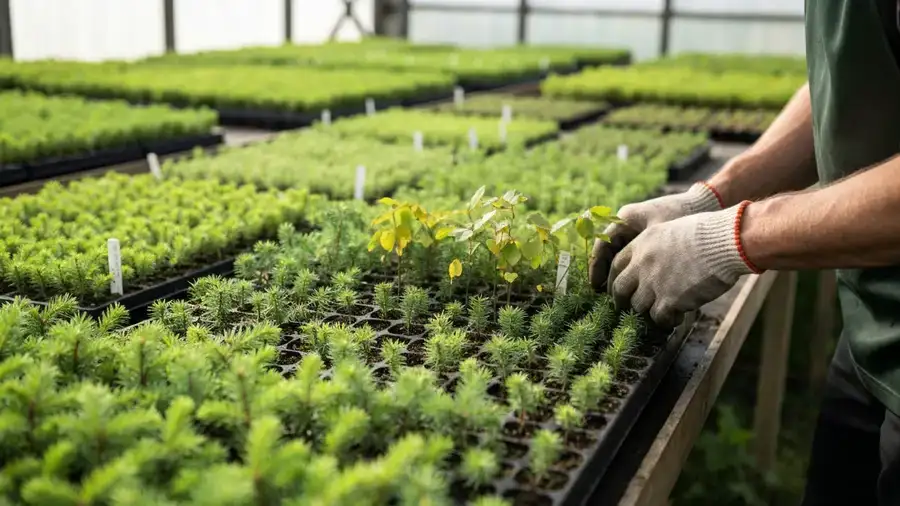
Rather than replanting a single commercial species, the project uses a mix of conifer and deciduous trees along with native shrubs, chosen to improve forest resilience and rebuild wildlife habitat. That diversity is a deliberate hedge: mixed-species stands tend to be more resistant to pests, disease and fire than monocultures, and they support a wider range of wildlife.
It is also a reminder that reforestation is not simply about counting stems in the ground. The choice of species, the restoration of habitat, and the long-term survival of the planting all determine whether a project succeeds ecologically — a distinction at the heart of debates over afforestation versus reforestation. Getting the mix right is what turns a planted site into a functioning forest, and it helps avoid the pitfalls of large programs that overlook wildlife in the rush to plant.
Local Jobs and the 2 Billion Trees Program
Beyond the ecological payoff, the initiative delivers economic benefits close to home. It is creating employment for local crews across the full restoration cycle — seed collection, nursery work, planting and monitoring — building forestry skills and steady seasonal work within the community. That vertical model, from seed to survival survey, keeps both the labour and the expertise local.
The project is funded through the Government of Canada’s 2 Billion Trees Program, which underwrites large-scale planting across the country. For the Osoyoos Indian Band, the payoff is layered: restored forests and wildlife habitat, more resilient stands for a changing climate, and jobs that root economic opportunity in the same land the trees are healing. In a season when so much forestry news is about loss, more than 900,000 new trees stand as a tangible investment in what comes next. It is also a model other First Nations and forest managers are watching closely: community-owned, climate-adapted restoration that pairs ecological recovery with local jobs and keeps decision-making in the hands of the people closest to the land.