Central Oregon Wildfires: Coyote Fire Update 2026
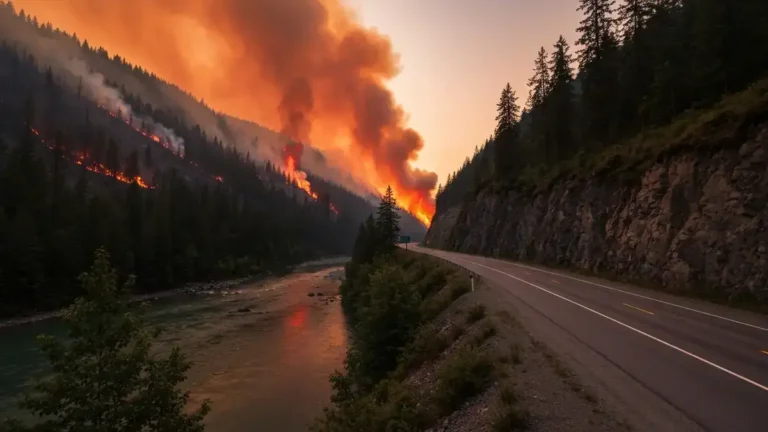
A cluster of Central Oregon wildfires — the Coyote, Henry, Pilot, Connant and Crooked fires — has crews racing against volatile weather, with the Coyote Fire the largest and most active of the group. As of mid-week, firefighters were making measured progress even as forecasters warned that lightning and gusty winds could undo hard-won containment in a matter of hours.
Central Oregon Wildfires Prompt a Red Flag Warning
The immediate concern is the weather. The National Weather Service issued a Red Flag Warning for abundant lightning and the potential for gusty outflow winds across the region — the twin ingredients that turn a manageable fire into a runaway one. With critical fire conditions in place, officials cautioned that any new start could spread quickly, and that existing fires could test their containment lines.
Red Flag days reshape strategy. Rather than pressing deep into a fire’s interior, crews spend the hours before a wind event strengthening and reinforcing perimeter lines, staging equipment, and positioning aircraft to respond the moment smoke lifts. That defensive posture reflects a hard-earned lesson from Western fire seasons, a theme explored in coverage of how West Coast wildfires are reshaping the fire future.
The Coyote Fire: Size, Containment and Tactics
The Coyote Fire, burning south of the community of Post, had grown to roughly 17,300 to 17,400 acres and was reported at about 21 to 25 percent containment in mid-week updates — a sign that crews were gaining ground even as the fire remained active. Containment percentages can be deceptive on a fire this size, but the trend was moving in the right direction.
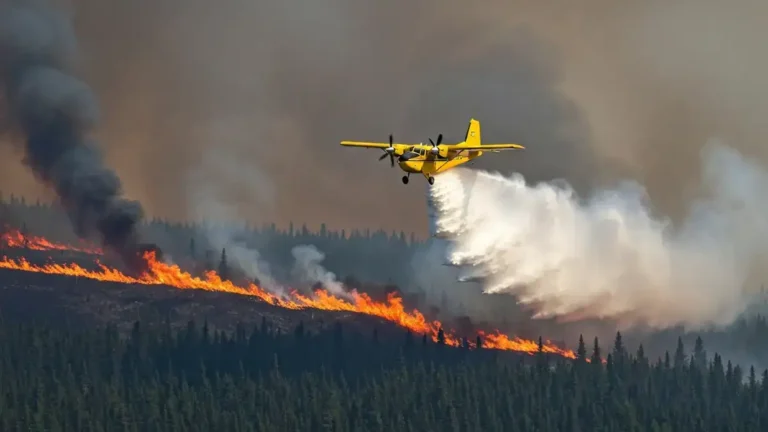
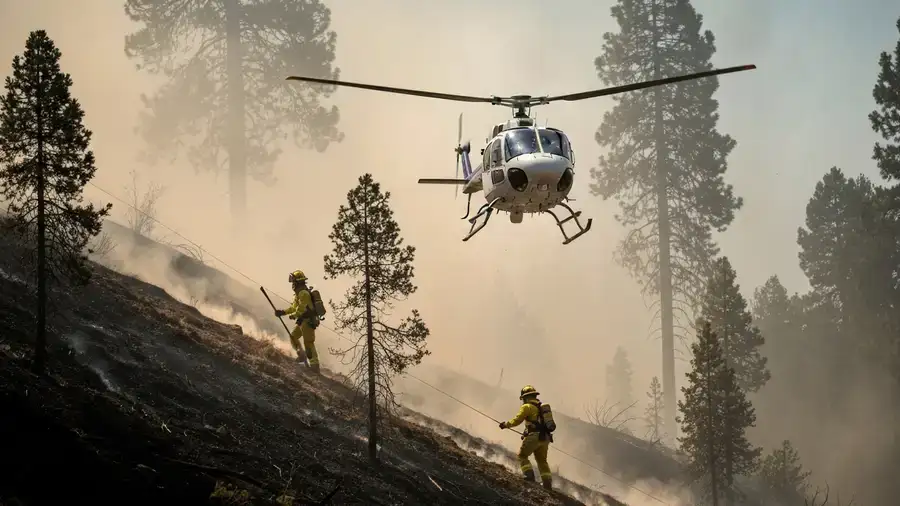
The tactics were a coordinated air-and-ground effort. Large air tankers laid retardant along the fire’s south end, while helicopters supported Hotshot crews with bucket drops on the western portion. Aircraft launched as soon as smoke lifted enough for safe flying, working to slow the fire’s progression so ground resources could engage as directly as conditions allowed. Along the southeast flank, crews and equipment worked through the day and made steady progress, and the northern perimeter held within its existing lines. It is painstaking work, and — as one close look at a recent California wildfire illustrates — the difference between holding and losing a line often comes down to hours.
The Coyote Fire does not burn in isolation. It is grouped with the Henry, Pilot, Connant and Crooked fires under a single management effort, an arrangement that lets fire managers share aircraft, crews and logistics across multiple incidents rather than duplicating resources for each. That kind of consolidation matters during a busy stretch of the season, when air tankers and Hotshot crews are in demand across the West and every incident is effectively competing for the same finite pool of people and equipment. Managing the fires together also gives incident commanders a clearer picture of where the greatest threat lies on any given day, so they can concentrate force where it counts and hold the line elsewhere.
Fighting Fire Within Old Burn Scars
One of the more revealing details of the Coyote Fire fight is where the retardant went: onto the fire’s south end within the 2020 Frog Fire burn scar. Old burn scars — areas torched in previous years — carry lighter, more broken fuels, and firefighters increasingly use them as ready-made containment features. To the east, the 2024 Wiley Flat Fire scar was likewise helping to check the Coyote Fire’s spread.
That dynamic captures a defining feature of the modern Western fire landscape: large fires both create and encounter the scars of past fires, and those scars become key tactical assets in the next incident. It also underscores a nuanced point about fuels management — that decades of aggressive suppression can leave landscapes primed to burn, which is why researchers warn that suppression alone can raise long-term risk. A mosaic of past burns, by contrast, can slow the next fire down.
The Weather Threat and What Comes Next
Even with progress on the ground, the near-term outlook keeps everyone on edge. Wind-driven embers had already ignited several small spot fires on the western portion of the Coyote Fire; crews were prepared and quickly extinguished them, and they gained containment along the northeastern perimeter, allowing resources to shift focus south. But under a Red Flag Warning, a single new lightning strike or wind shift can reset the fight.
For now, the Central Oregon wildfires remain a story of incremental gains against an unforgiving forecast. Crews have leaned on aircraft, Hotshot expertise and the landscape’s own burn history to hold the Coyote Fire’s lines, and the coming days — and the weather that arrives with them — will determine whether that progress holds or the fires make another run. For a region deep into a punishing summer, every acre held under a Red Flag Warning is a win worth defending.