Section 338: The 1930 Law Behind 50% Canada Tariffs

The 50% tariffs now bearing down on Canadian goods rest on a startlingly old foundation. Section 338 of the Tariff Act of 1930 — a provision of the same Smoot-Hawley law that deepened the Great Depression — is the legal authority Washington has revived to impose the duties. For an industry watching furniture, lumber and other wood products swept into the tariff net, the mechanism matters as much as the rate, because it shapes how far the measures can reach and how quickly they take hold.
What Section 338 Actually Is
At its core, Section 338 is a retaliation tool. It authorizes the president to impose additional duties of up to 50% ad valorem on imports from any country found to be discriminating against U.S. commerce. Crucially, according to Bloomberg’s explainer on the mechanism, the statute carries almost no procedural requirements — no lengthy investigation window of the kind that governs other trade tools. That combination of a high ceiling and a short runway is exactly what makes it potent.
The provision sits inside the Tariff Act of 1930, better known as Smoot-Hawley — the sweeping tariff law economists blame for worsening the global downturn of the 1930s. Reaching back into that statute for a live trade weapon is unusual on its face, and it signals how far the administration is willing to go to find durable legal ground for its tariff agenda. The duties are already reshaping the 2026 wood products market even before they formally take effect.
A Dormant Power Revived After Decades
What makes this especially remarkable is that Section 338 had, in practical terms, been forgotten. Trade lawyers who studied it found no public record of the authority being used since 1949, meaning the current proclamations amount to its first real deployment in the modern era.
Section 338 has “gone unused for decades.”
— John Veroneau and Catherine Gibson, trade lawyers, Covington & Burling LLP (2016 analysis), Treefrog Creative
Dusting off a statute untouched for three-quarters of a century carries real legal risk, since there is virtually no modern case law interpreting how it should apply. But it also gives the administration a fresh basis to act after other avenues narrowed.
Why Washington Reached for It Now
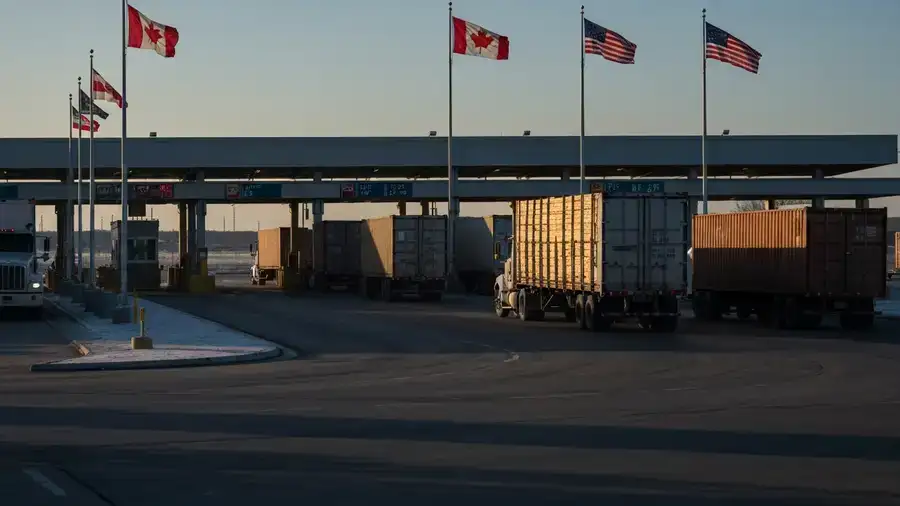
The timing is not accidental. The administration turned to Section 338 after the Supreme Court invalidated its use of the International Emergency Economic Powers Act, or IEEPA, as a basis for tariffs. With that emergency-powers route closed off, the century-old discrimination provision offered an alternative path to the same end.
The three proclamations signed July 20, 2026 are each framed around a specific finding of Canadian discrimination against U.S. commerce. The White House proclamation on motor vehicles, for example, cites Canadian tariffs and quotas on American autos as the trigger, with parallel orders targeting alcoholic beverages and dairy. Building the case around discrete “discrimination” findings is how Section 338 is meant to work — each order points to a concrete grievance to justify the added duty.
Yet the list of covered goods runs far wider than those three headline sectors. The move fits a broader pattern of escalation that has prompted Canadian officials to weigh Ottawa’s retaliation options and provincial leaders to press their case, including B.C. concerns raised directly with U.S. diplomats. Because the statute lets the president act with minimal process once a discrimination finding is made, critics warn it could become a repeatable template for future disputes rather than a one-off.
What It Means for Forest Products and Timing
For the forest sector, the significance is that Section 338’s broad “discrimination” trigger does not confine itself to autos and alcohol. The covered-goods schedule extends into wood products, pulling Canadian furniture, millwork and related manufactured items into the 50% band even though forestry is not named in the proclamation titles. That is how a dispute nominally about cars and dairy ends up landing on sawmill and value-added wood producers.
The duties take effect August 19, 2026, 30 days after signing — a narrow window for exporters to adjust or for negotiators to intervene. One wrinkle: amid the announcement, Trump had publicly criticized Canada over wildfires burning through Northwestern Ontario and fouling U.S. air. A senior official clarified that the 50% tariffs are not related to the fires, while adding that the president “has asked for options on that” — a reminder that the Section 338 toolbox, once reopened, may not stay limited to a single grievance.
For Canadian wood producers, the lesson is that the legal architecture behind these tariffs is as consequential as the headline number. A dormant Depression-era law, revived with minimal procedure and a 50% ceiling, now sits over a cross-border trade relationship worth tens of billions — and it reaches all the way to the mill.