Housing Bill Becomes Law: What It Means for Lumber Demand
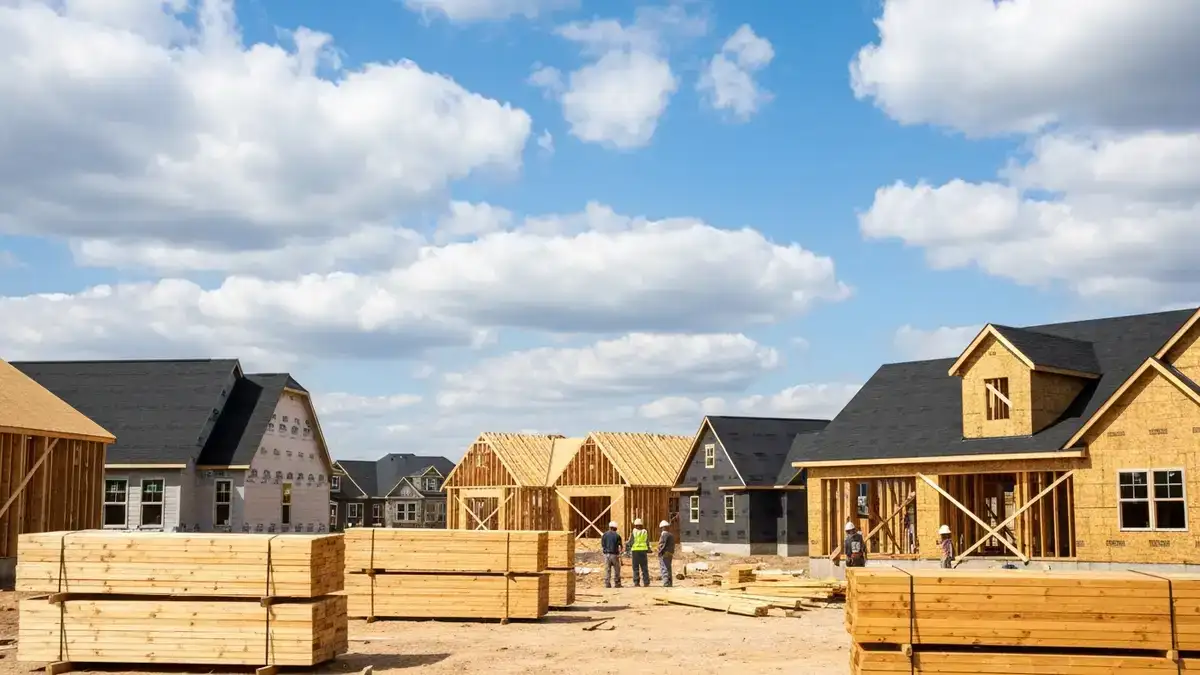
The most comprehensive US housing law in at least three decades became law on July 12, 2026, without a presidential signature — and for the forestry sector, the housing bill lumber demand implications deserve more attention than the political drama surrounding its passage. The 21st Century ROAD to Housing Act, a bipartisan package of 45+ provisions targeting housing affordability and supply, is now the law of the land. For softwood lumber producers, sawmill operators, and anyone watching homebuilding starts as a demand signal, this is the policy development that matters most in 2026.
How a Bill Becomes Law Without a Signature
President Trump refused to sign the legislation, posting on Truth Social: “I will not sign the Housing Bill…in PROTEST over the fact that the United States Senate is not capable of passing THE SAVE AMERICA ACT.” His objection was not to the housing provisions themselves but to Congress’s failure to prioritize his preferred elections legislation.
Under the US Constitution, a bill passed by Congress automatically becomes law if the president neither signs nor vetoes it within 10 days, excluding Sundays. That window expired July 12, and the 21st Century ROAD to Housing Act became law without a signature.
The bill passed with bipartisan support. Primary sponsors were Sen. Tim Scott (R-South Carolina), chair of the Senate Banking Committee, and Sen. Elizabeth Warren (D-Massachusetts). Warren called it “GROUNDBREAKING” and said it would “build more housing, bring down costs” — a characterization that speaks directly to the wood products market implications.
The 45+ Provisions That Matter to Wood Products
Political commentary has focused on what the law does for renters and first-time buyers. The provisions that matter most for the forestry sector are on the supply side.
Streamlined environmental reviews. The law accelerates environmental review processes for residential construction. Faster permitting means faster groundbreaks, shorter gaps between approved projects and actual lumber orders. For lumber producers and distributors, this compresses the lag between policy passage and demand impact.
Manufactured and modular home expansion. The law expands federal funding for factory-built housing and eliminates chassis requirements that previously constrained manufactured home design. The link between modular housing and modern forestry is well established — factory-built homes are high-volume lumber consumers with faster build cycles than site-built construction. Policy that expands this segment has a faster and more direct effect on board-feet consumed than traditional single-family construction.
Zoning reform grants. Local governments that exceed median homebuilding rates become eligible for federal grants under the new law. This creates financial incentives for municipalities to permit more residential density — more units means more lumber.
Corporate landlord restrictions. The law limits institutional investors’ purchases of existing single-family homes. In practice, this redirects demand from resale inventory toward new construction — which is where the lumber consumption is.
What the Numbers Say
The backdrop matters. The national median home price hit $440,600 in June 2026 — an all-time high, up 1.8% year-over-year. Lumber demand signals have been mixed heading into the second half of 2026, with wood panel prices showing some softening after a strong Q1.
Single-family starts in 2025 came in at 943,000 units — a 7% decline and the weakest performance since the pandemic recovery. That suppressed demand environment is exactly the context in which a housing supply law lands with the most weight. Analysts broadly expect the material rebound in starts to materialize in 2027–2028 as permitting activity triggered by the new law works its way through the pipeline.
A standard single-family home requires approximately 15,000 board feet of framing lumber. Even modest increases in annual starts — say 50,000 additional units annually — translate to 750 million board feet of incremental demand. Leading lumber producers have anticipated a homebuilding rebound as a central thesis for 2026 and beyond. The housing law provides the policy architecture to support that thesis.
The Timeline: When Does This Hit Lumber Markets?
The near-term effect is confidence, not volume. Builders and developers now have a clearer regulatory environment for moving projects forward. Permitting activity, which leads housing starts by several months, is the metric to watch in Q3 2026.
Manufactured homes move faster. The build cycle for factory-built units is measured in weeks, not months. The provisions eliminating chassis requirements and expanding federal funding for this segment could show up in lumber demand data within two to three quarters.
For site-built single-family and multifamily construction, the consensus expectation is that the 2027–2028 period sees the bulk of the demand uplift as zoning reforms take effect and developers execute on projects now clearing environmental review.
The tariff environment complicates the picture. Canadian softwood lumber — which supplies roughly 25% of US annual demand — continues to face effective duty rates near 35%, adding a minimum $10,000 to new home construction costs according to the National Association of Home Builders. A housing affordability law that stimulates demand will not reach its full potential while cost inputs remain artificially elevated.
For sawmill operators and timber producers tracking the demand cycle, the 21st Century ROAD to Housing Act is the most consequential policy development of 2026. The volume won’t show up this quarter. But the direction is clear.